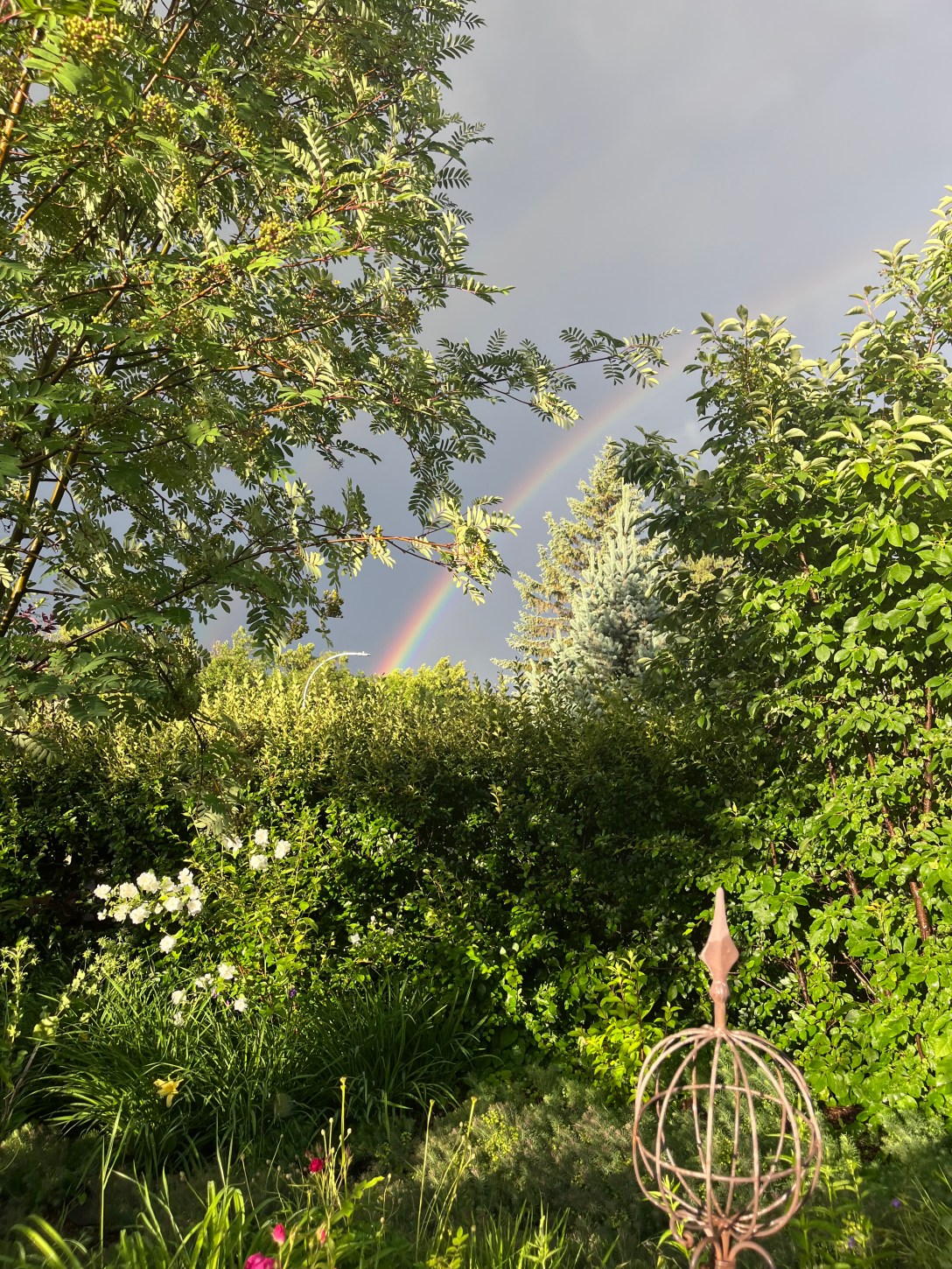
To tour my neighbourhood is to delight in all the senses. The fragrance of roses and mock orange and peonies fill the streets. Colours dazzle the eye. Stem and branch and bloom long for touch. Steal this bloom! Your ears fill with song bird signals. Bees zig zag and buzz on their dizzying pollination routes.
It is my great good fortune to amble from my house to my neighbour’s gardens via the most splendid natural staircase in the city. Don’t take my word for it. One day as I walked through this leafy bower, an Edmonton city carpenter who had built this structure repaired a step.
“This is the most beautiful wooden stair structure we have built in the city,” he smiled.
And so it is. Under this long wooden walkway, a den of coyotes yip all night. White-tailed Jack Rabbits, brown in summer, bleached white in winter, run wild scampering up the road to their hiding place. Sometimes they huddle behind my garage – to our mutual surprise.
In this blog post, the gardens are organized according to my rambling route from here to there and back again in Mill Creek. I selected these gardens in response to the variety of gardening designs we encounter here from informal cottage gardens to more formal beds. Some gardeners delight in multiplicity and variety. Others create dramatic effect through repetition and mass planting. Our latitude 53 climate in winter makes us a frigid Zone 3 or 4. Some plants remain tropical fantasies. Our gardens are also determined by their ‘aspect’ or the compass direction. Does the garden face a shaded north or a sunny south? Is it blessed with a gentle morning eastern light. Or does it swelter in the hot blaze of a long Western Canadian afternoon.
While light and heat and water dictate which plants flourish, so much depends upon the creativity of the gardener.
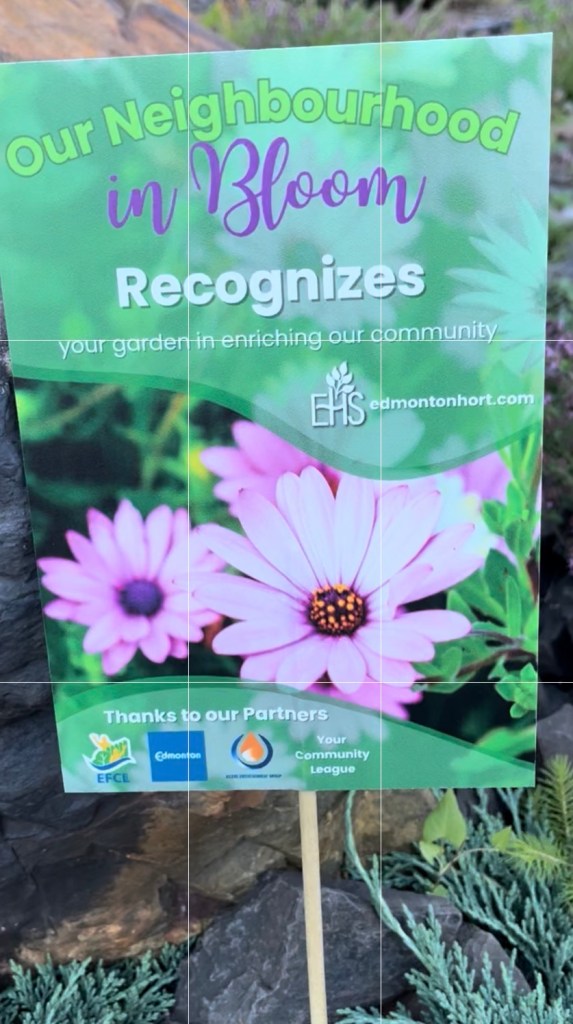
The city funded the Front Yards in Bloom program that flourished for 25 years until Edmonton City Council abolished it. In the past, postal workers would identify city gardens of note and Edmonton Horticultural volunteers would come out to inspect them and deliver small placards identifying their exceptional character. A competition would award the best gardens in various categories at an annual gathering. In 2025, spurred on by the devastating cuts to urban funding by the ultra-right provincial UCP government, Edmonton City Council cancelled this program.
Out of the ashes of this erasure, the new Neighbourhood In Bloom program began in 2025 and was developed when the Edmonton Horticultural Society in collaboration with city Community Leagues. Each league is charged with sending out amateur garden enthusiasts to evaluate local gardens. And the signage is provided by the Edmonton Horticultural Society. There is no competion or awards ceremony and no professional horticultural expertise in the process. The effects of this are as yet unknown.
Thus along with another neighbour I helped to organize our Strathcona Community League. Janice B divided up our Strathcona Community League area into five sections. And five kind neighbour volunteers and garden enthusiasts walked the streets on the lookout for gardens that shone. Thus in my neighbourhood, fifty gardens were chosen.
After deciding on the eleven gardens in my small area, I thought it would be helpful for me to recall the botanical knowledge I gained when I was preparing my own garden.
A Single Mother Gardens 1999-present
As it turned out, an unintended consequence of single mothering was that I learned to love gardening. While my daughter was young, I was often at home alone in the while she slept. In that quiet long evening time at latitude 53, I dug up my back and front yards and researched what plants might go where. While in the midst mothering and working as a professor at the university, I dreamed one day when I retired I would take a master horticultural course.
2004: The year my precious Bao turned 5, a marvelous visiting scholar from Shandong Province, PRC, lived with us for the year. Rose was an exceptional person, very smart, hilariously funny, with a wry and wise wit. When Rose saw me gardening one evening, she volunteered to pitch in as I maniacally tore up a section of the front yard – an arduous task. At one point she posed for a photograph with a pitchfork. She laughed that this gardening was almost as difficult as her Cultural Revolution years when, like millions of others, she was banished to the countryside as a young student. Rose concluded her story with an admission that at our house the food was better than the slug-filled cabbages they had to eat during that torturous era of her youth.


2005: Such is the origin of my front yard. Fast forward to 2005 and Rose accompanied us on a special trip in Yunnan, PRC. We travelled in a small overcrowded bus on the highway north past Tiger Leaping Gorge to the town of Zhongdian, renamed Shangri-la to attract tourists. A large Tibetan population lives there and this is the site of the largest Tibetan Buddhist temple in China, a beautiful place. We celebrated Bao’s seventh birthday together in a small guest house courtyard and I still fly Tibetan prayer flags on my front porch in memory of our gardening travels.

And, as it turned out, on retirement, I still love to garden. But my path took a different direction when, after COVID, I developed a serious auto-immune condition. In order to diminish the counter-effects of the treatment, I deepened my forty-year interest in yoga and completed a series of yoga teacher trainings. I then created RiseUpYOGA.ca and teach yoga and meditation on-line as well as in various local community halls.
This blog post celebrates the lives and beauty of gardens and the pleasure I experience in exploring them. One of the gardens I chose is my own, if you will pardon this narcisstic move. (Such is the guilelessness of the amateur gardener.) Guess which one.
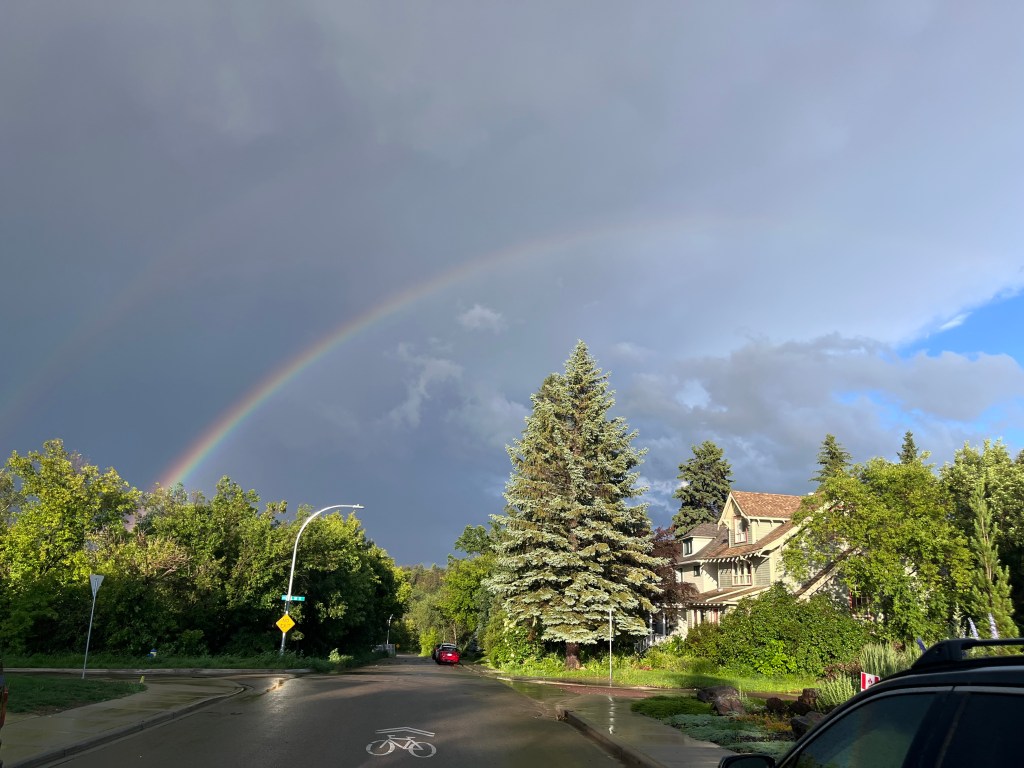
1. A White Garden – 9845 91 Avenue
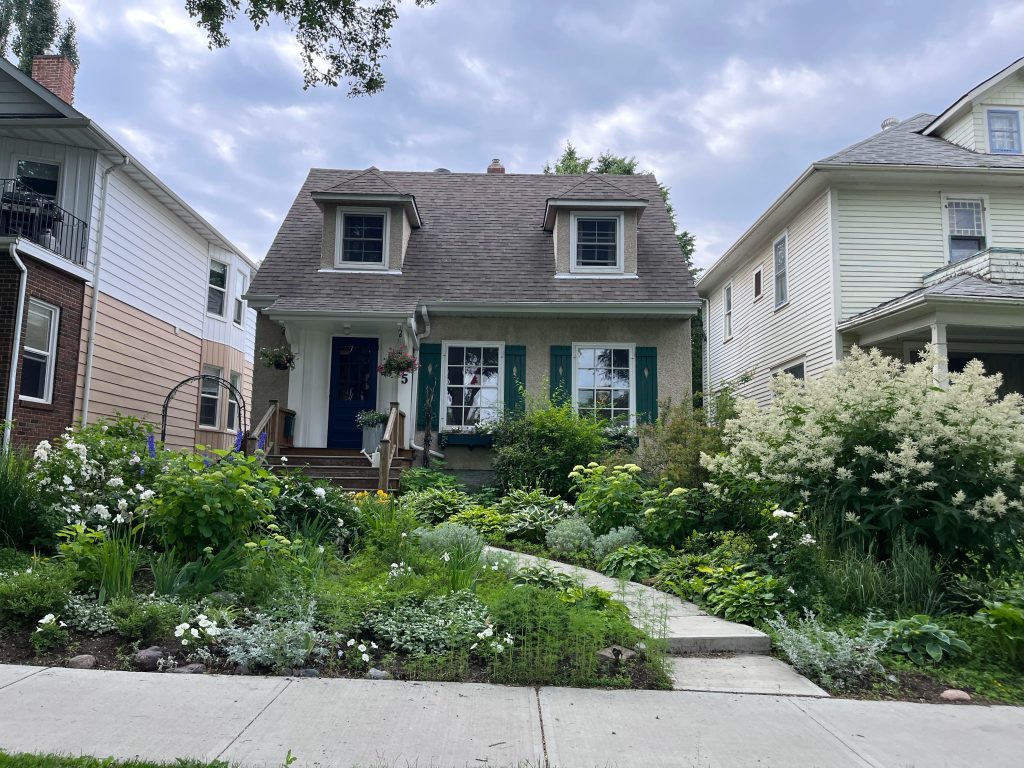
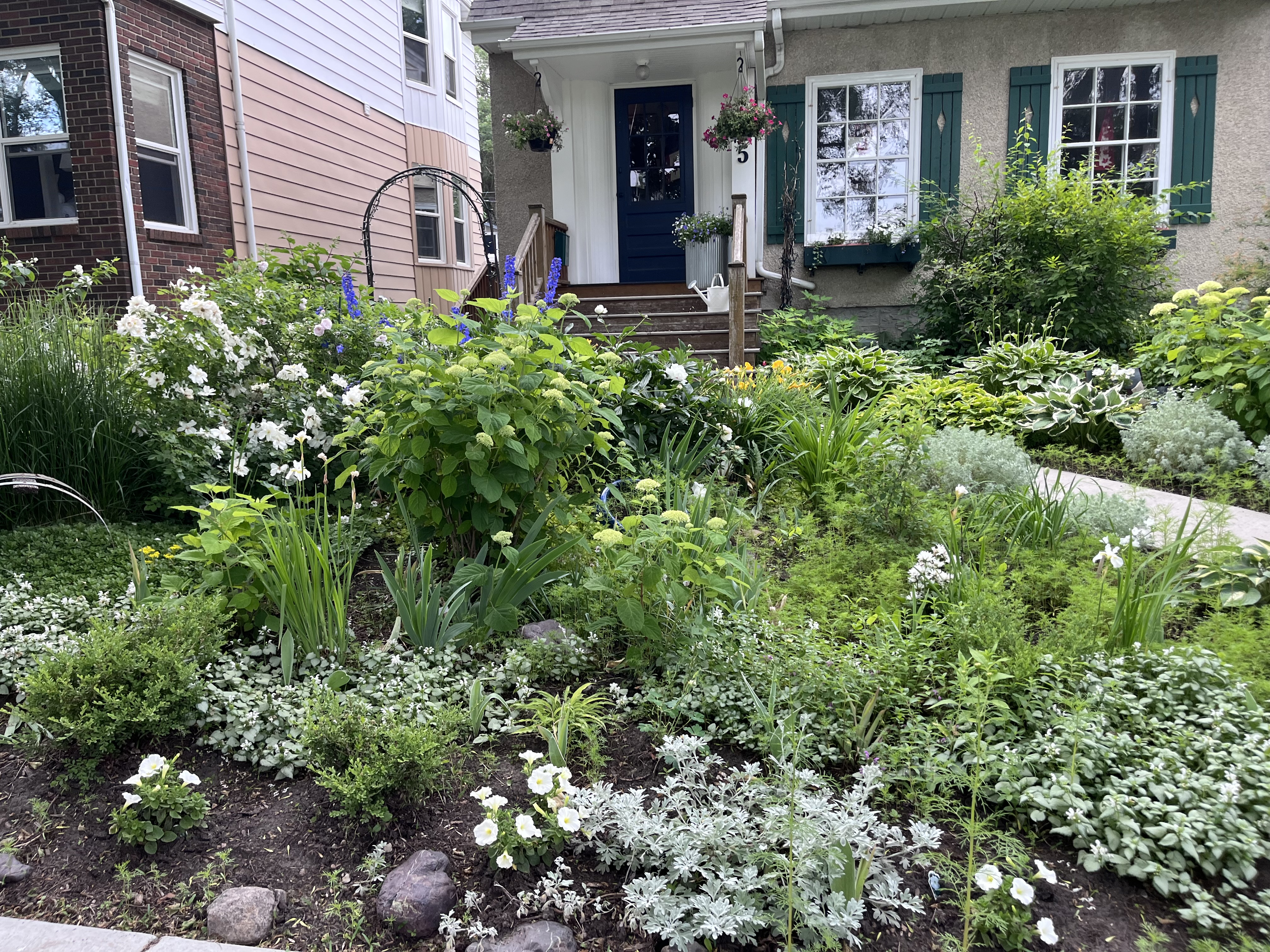
This special garden would please any creative eye. As I stand surveying the groundlings by the sidewalk’s edge in this Alberta garden, it is no surprise that the pale leaves of Artemesia prompted its alternative common name Dusty Miller. I remember that the Greek goddess Artemis was mythically associated with the silvery moon. And certainly this garden glows as though moonstruck at noon. Silvery foliage and white blossoms are interspersed throughout. Creamy roses and pale petunias, surprising white irises and peonies, and Annabelle Hydrangea all repeat this theme.
With this garden’s serene flow and shape, the unhurried swoop of walkway and blooms seduce. These flower beds flounce, a perfect landing cushion for the delightful green-shuttered house. On one side, the spired drama of creamy White Fleece Flower bloom. The walkway’s curve disappears before wide wooden steps welcome us with blue and gold – tall deep blue delphiniums and Stella d’Oro Daylilies. All along the curve, other shapely hostas and silvery astilbe line up and further away a golden tipped hosta rhymes. A thoroughly tender cottage garden with moments of tailored structure.
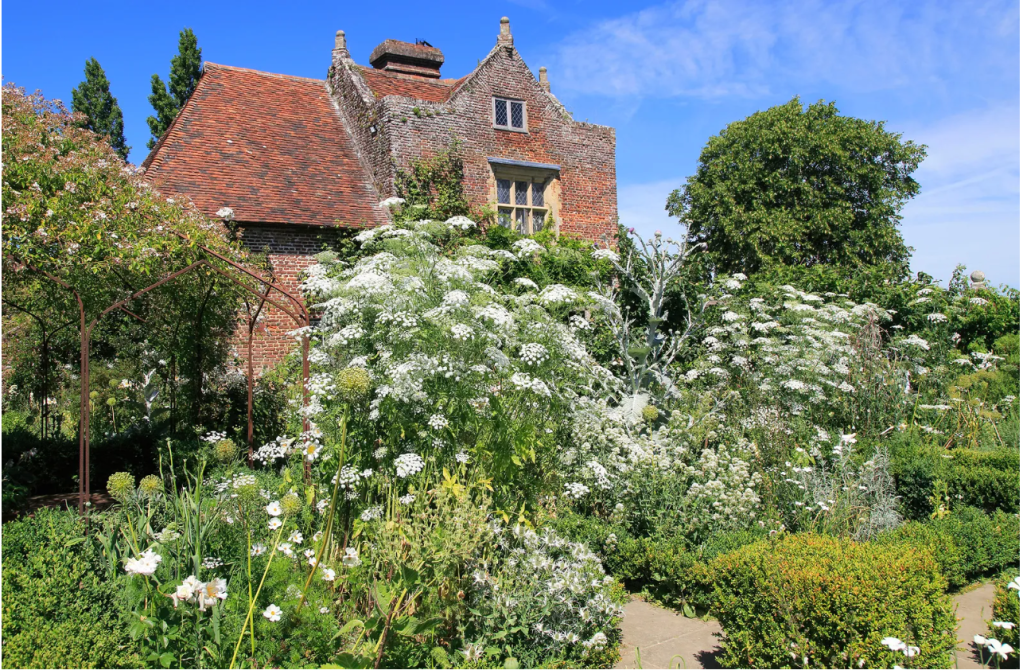
I once visited Vita Sackville-West’s White Garden that she and her husband created after they purchesed their Sissinghurst property in 1930 in Kent, England. This renowned White Garden remains close to my heart. Vita was a woman of many talents – writer, gardener, and one-time lover of the brilliant feminist prose stylist Virginia Woolf. A beautiful White Garden pulses with my literary heartbeat.
2. A Terraced Symmetry of Delights – 9815 92 Avenue
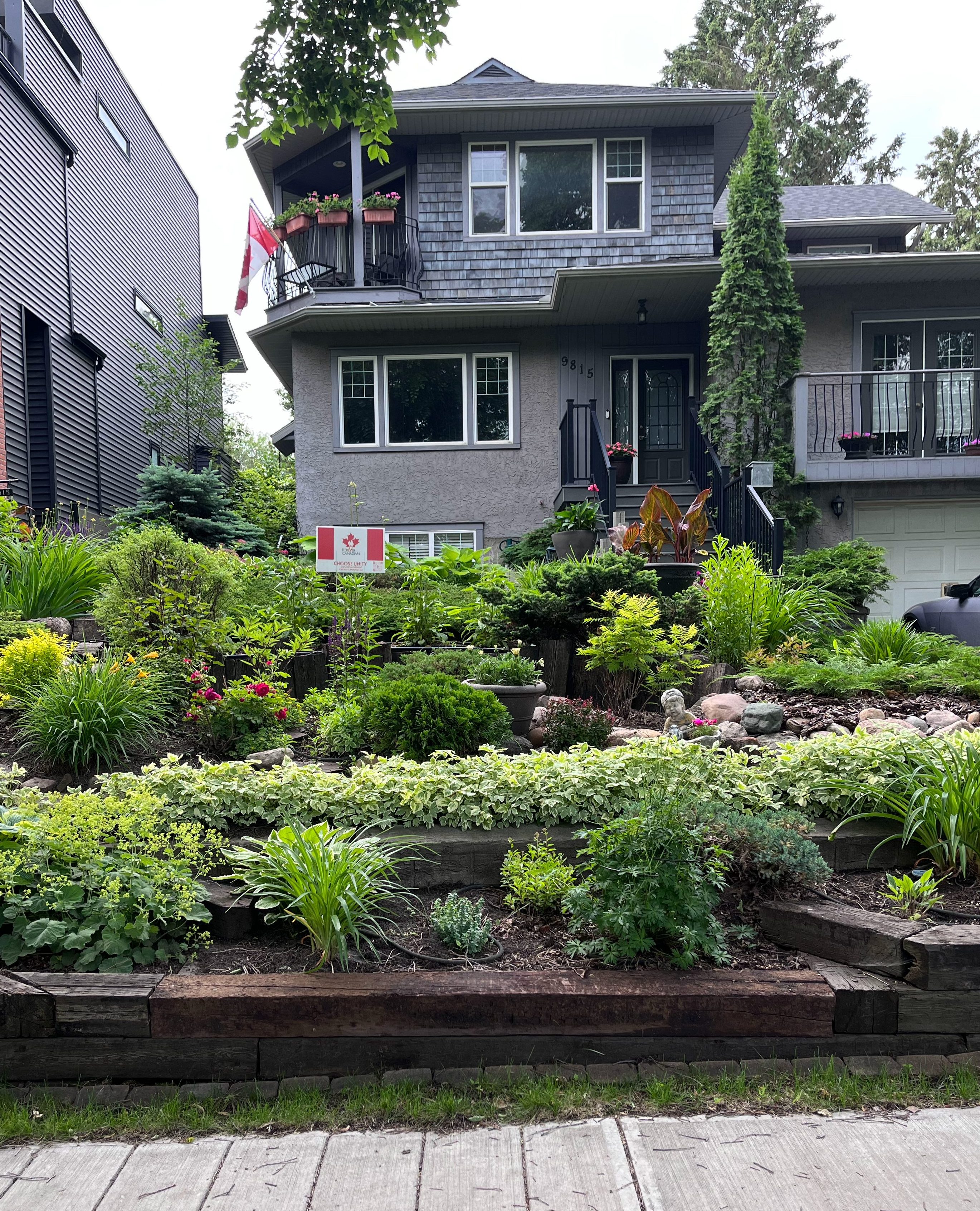
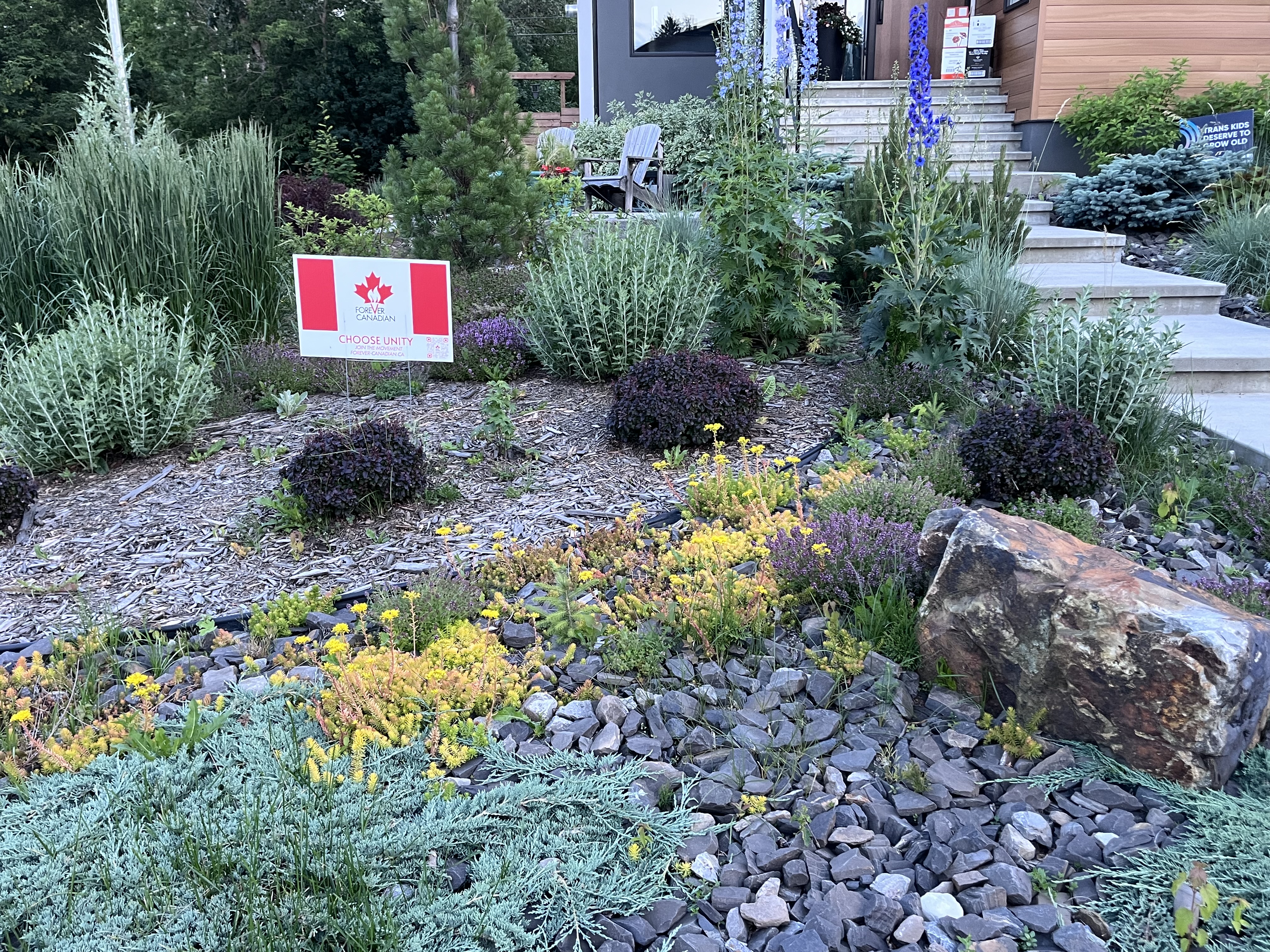
On the next block I pass by a terraced garden. On the balcony above, a Canadian flag flaps in the breeze and below Forever Canadian sign stakes out our “Keep Alberta in Canada” position. In 2026, this is what we call patriotic resistance to the White Supremacist Trumpist regime sadly now ruling our remarkable province.
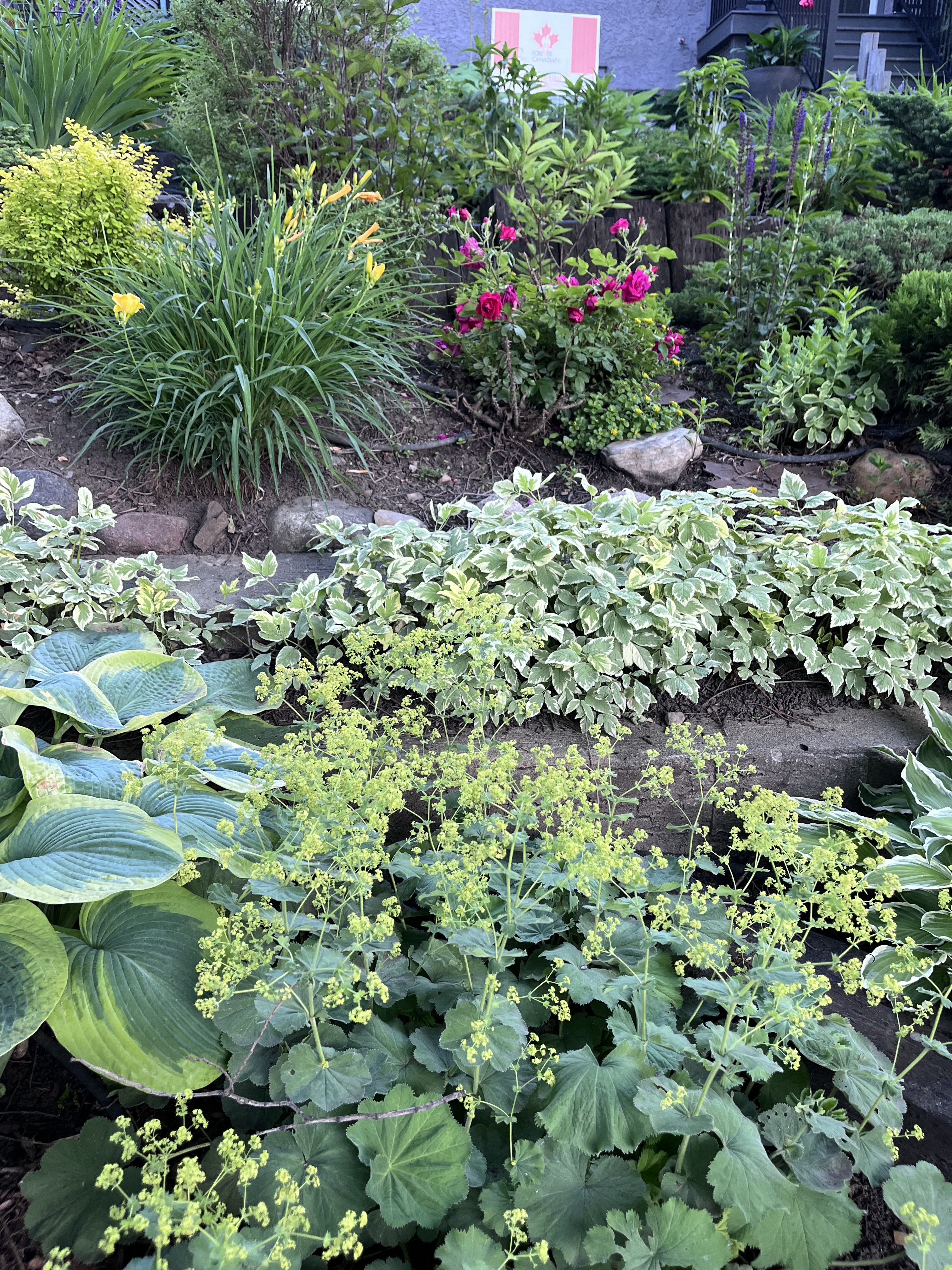
Grateful for the enduring devotion to this terraced garden. Hefty railway ties bind their stepped ascent. Fruitful design of hard and soft, pale light and shadow. Variable green shades and geometrical shapes. Waves of familiar plants lap up the hillside to sound like exotic notes in a musical staff playing this summer’s tune. The frilly white parade of goutweed makes a virtue of its invasive habit. Bird’s Nest Spruce, Junipers, Dwarf Globe Cedars, and a Blue Spruce provide evergreen colour all year round. So much movement in the garden: the froth of charteuse Lady’s Mantle, arcing and vertical stems of lilies, plush red roses, plump geraniums, and lush fern fans. The eye rises up to the potted bronze Canna Lily just below the stairs and the towering columnar cedar by the front door.


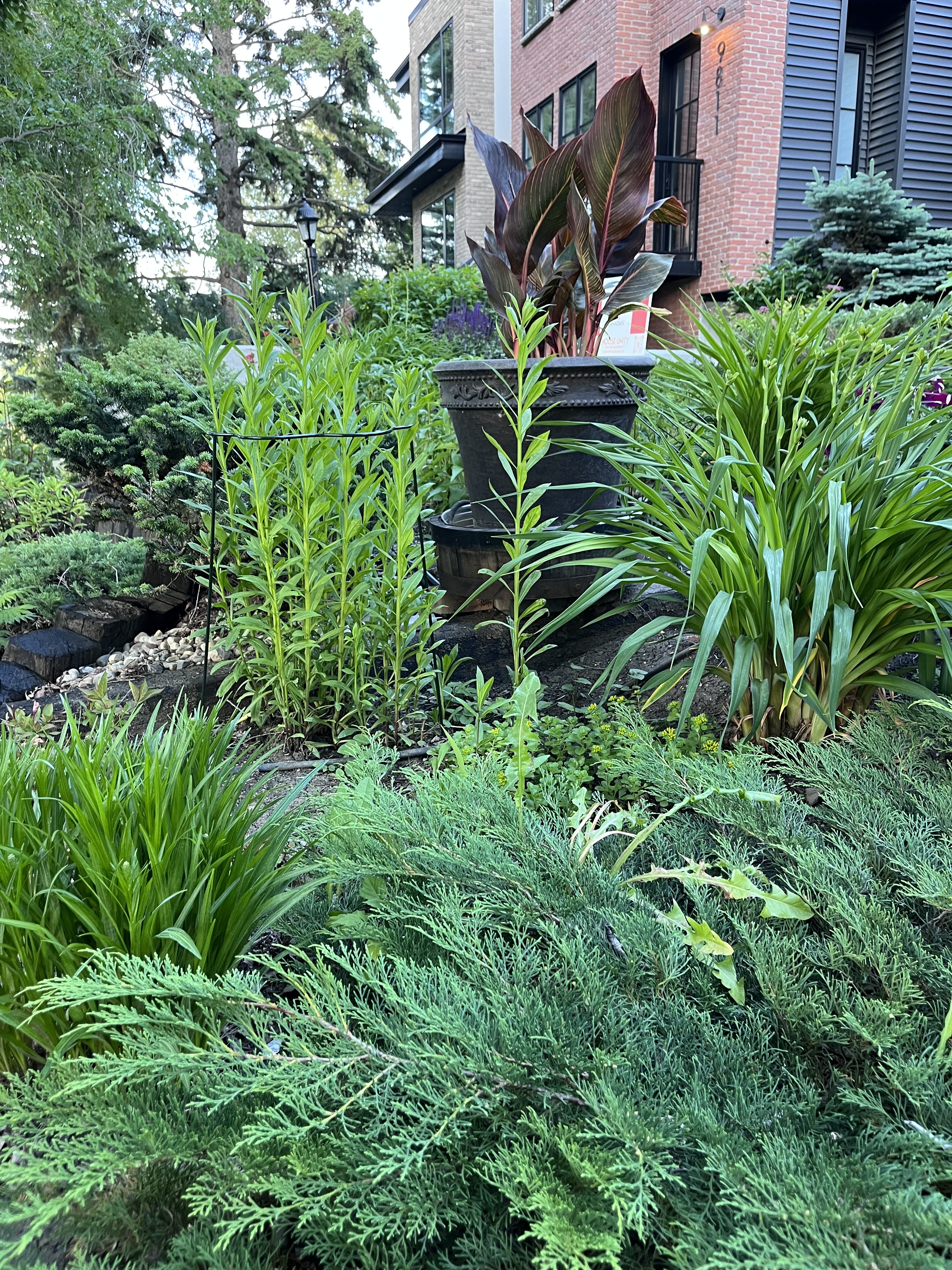

3. A Lush Low-Water Garden – 9825 91 Avenue
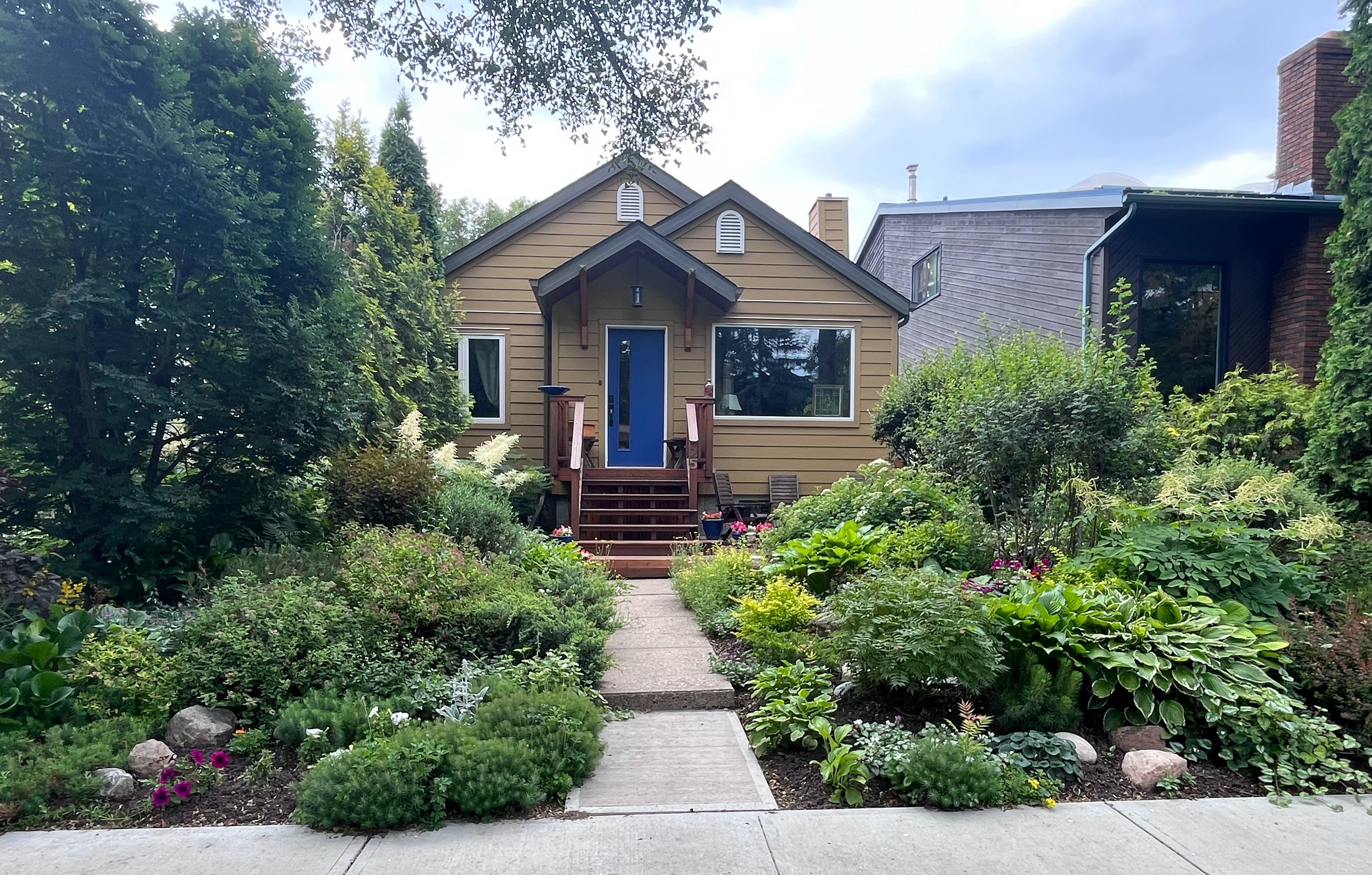
A few doors down, another garden charms. I knew this gardener’s father. A magician of the soil with a sharpened spade, an unmatched energy, and a disarming smile. And here, this son’s splendid mature garden has been cultivated over time. Hardscape and rocks punctuate the abundant and varied verdant mounds and shapes. Leaves jive together in the sun from the dizzy tall-plumed creamy goatsbeard to the lowly silver lamium creeping along the ground. In shades of white and cream, varigated hosta’s spear-like leaves contrast with the velour plush of gleaming Lamb’s Ear and the leathery shine of Bergenia. Burgundy Japanese barberry, purplish ninebark and spirea, and magenta petunias punctuate the scene. Japanese Silver Grass and Spirea vary shape and shade.
I couldn’t identify the kidney-shaped leaves of Wild Ginger that appeared irridescent in the sun. When I consulted my plant identificatioin app (Picture This), I discovered the flower of this plant is called “perfect” as it has both stamen and carpels. This form is called bisexual or hermaphroditic or androgynous or synoescious. Take that Alberta’s UCP! Even plant life thinks your traumatising anti-trans gender politics are not only stupid but wrong.
4. An Artist’s Sculpted Garden – 9810 91 Avenue
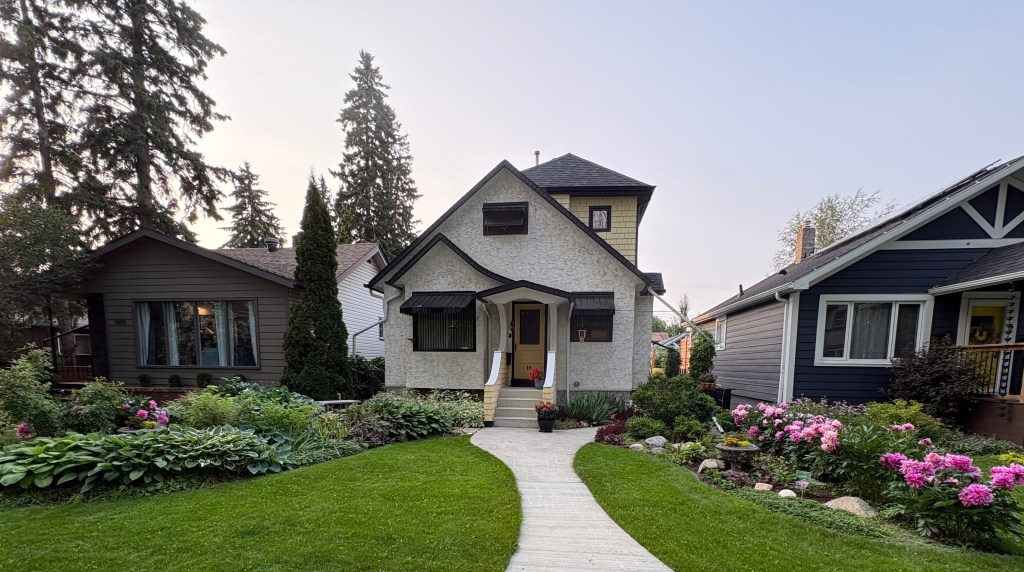
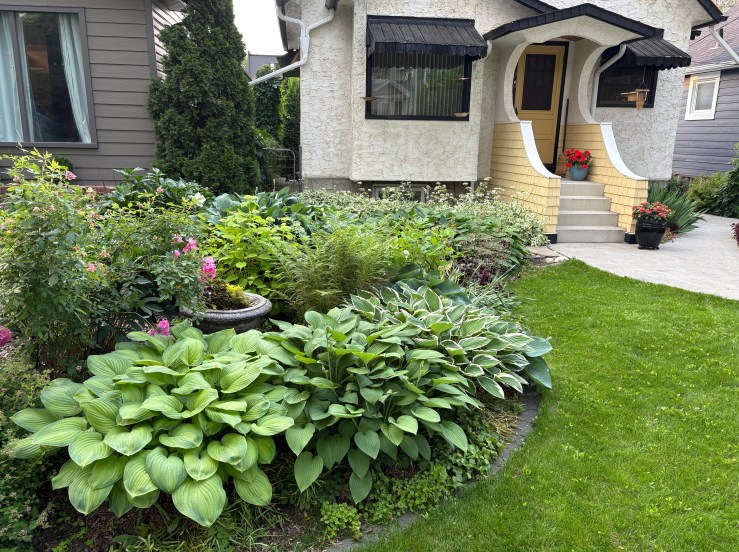
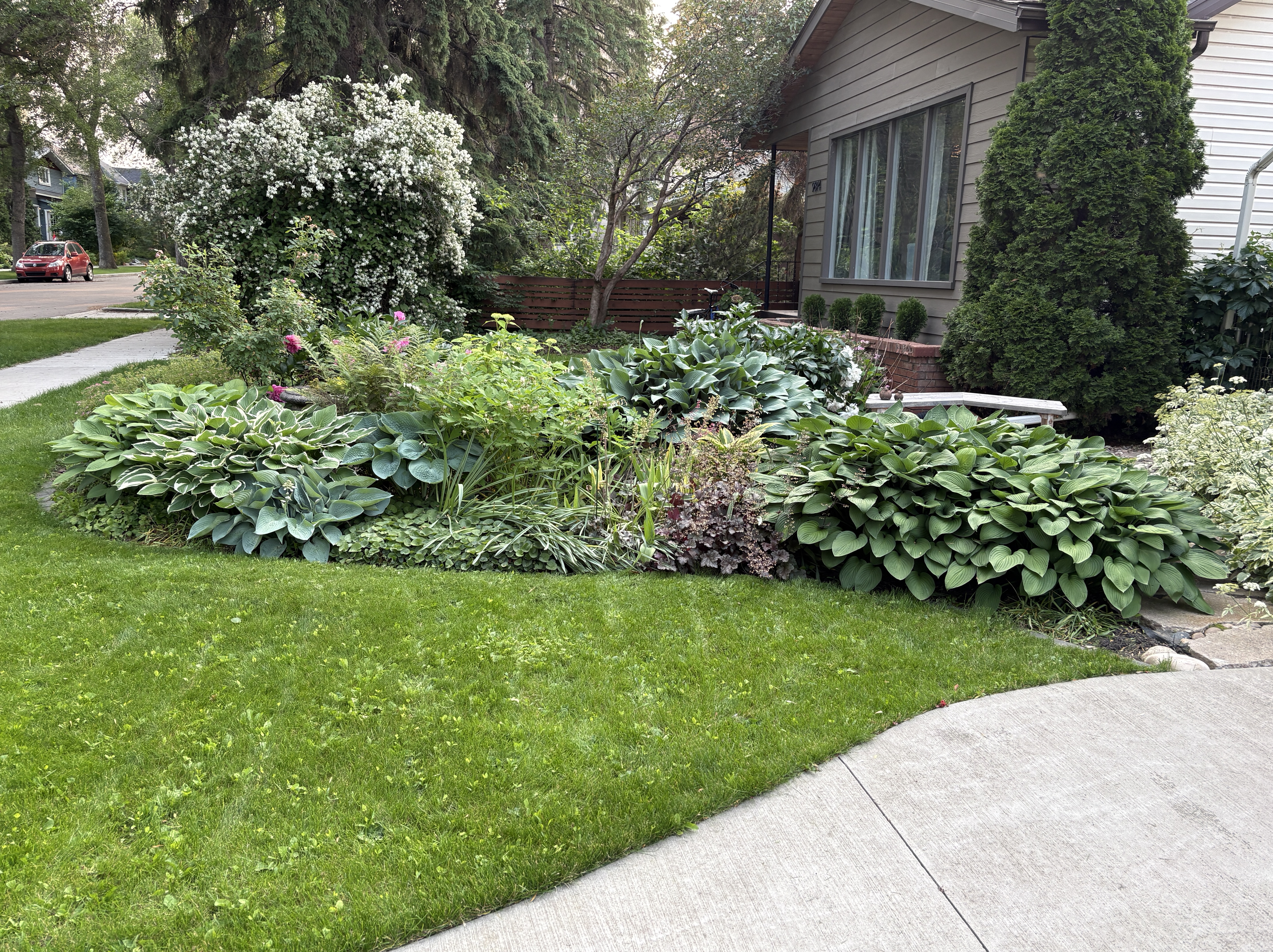
The twinned gardens fascinate by foregrounding the hourglass curve of the entrance walkway like a stage’s curtains drawn open with just enough shade to surprise. Ripples of green frame the 1930’s house that is washed in white and pale yellow. Sweet black awnings act like eyelashes. The velvety tufted lawn begs for touch.
Balanced asymmetrical plantings in impeccably tended beds give way to the line dance of pink peonies on the east. On the west side, ostrich ferns soften the sculptural strength of three giant hostas in blue and chartreuse and cream trim. Coral bells in bloom along with creeping sedum and hens and chickens line the walk. Bearded iris, fiery potted lantana, and brilliant begonias lead to a spiralling clematis in the side yard that draws the eye up making an archway to the back garden. Gold spirea, barrberry, boxwood and cedar give structure and colour. The detailed precision of these beds reflects a gardener’s artistic and attentive eye and glove.

5. A Riverbed Foliage Garden – 9817 91 Avenue
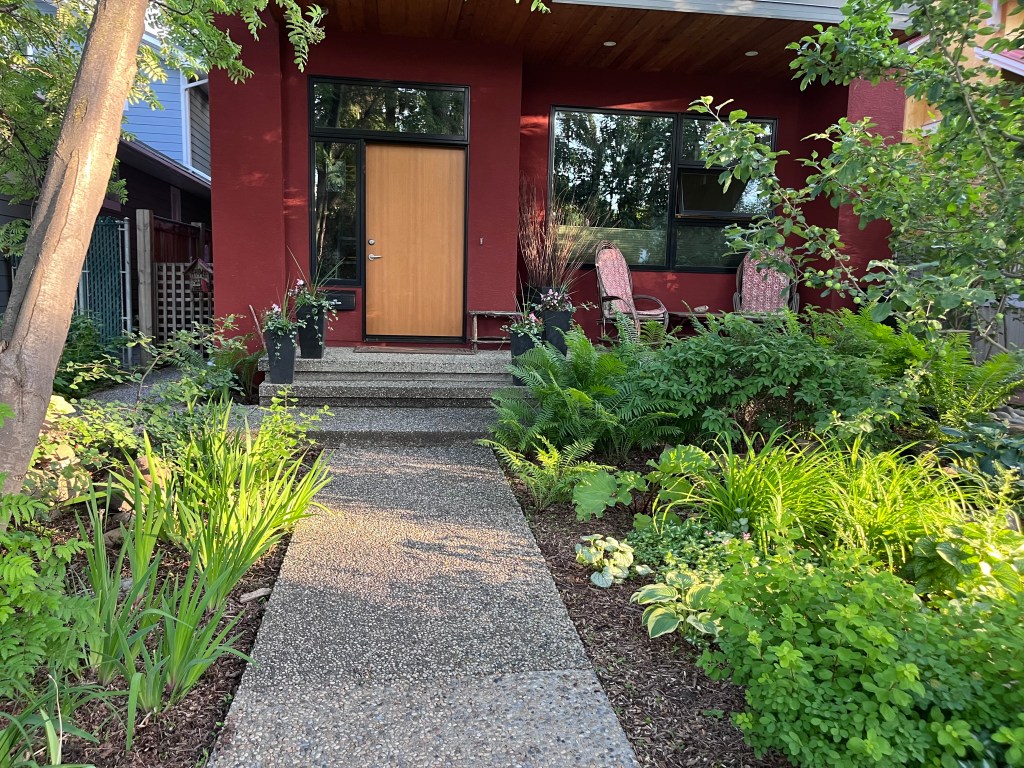
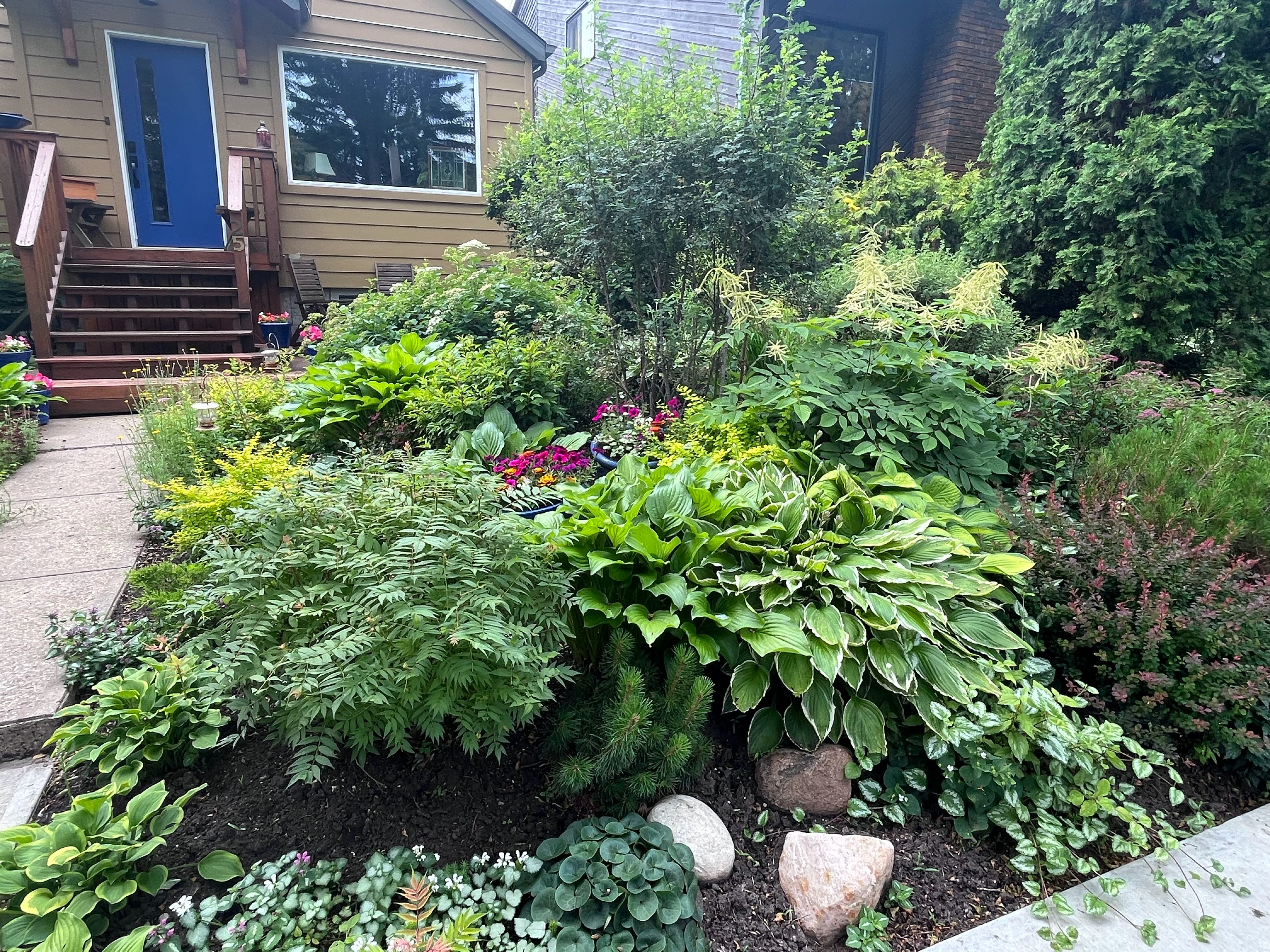
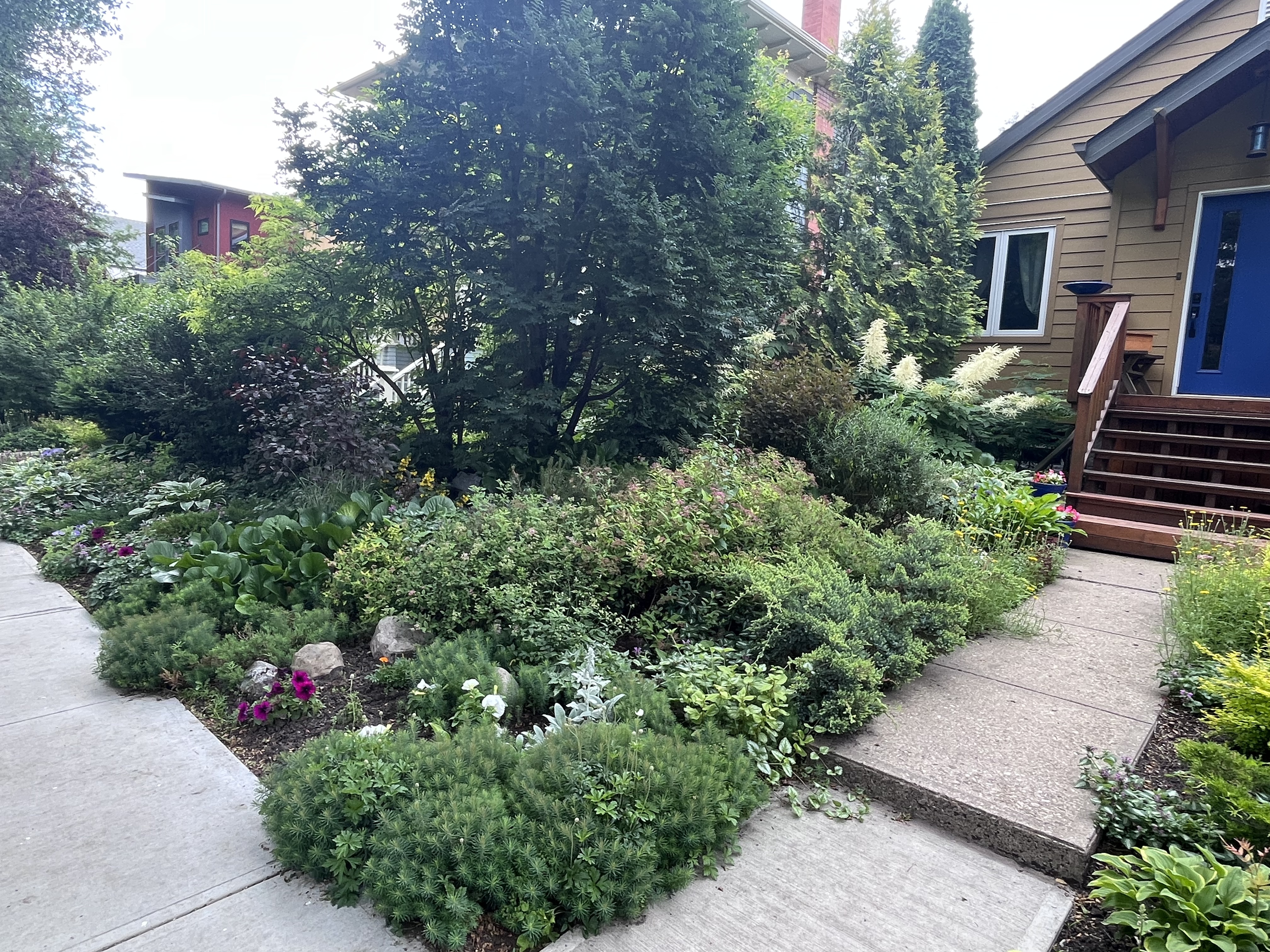
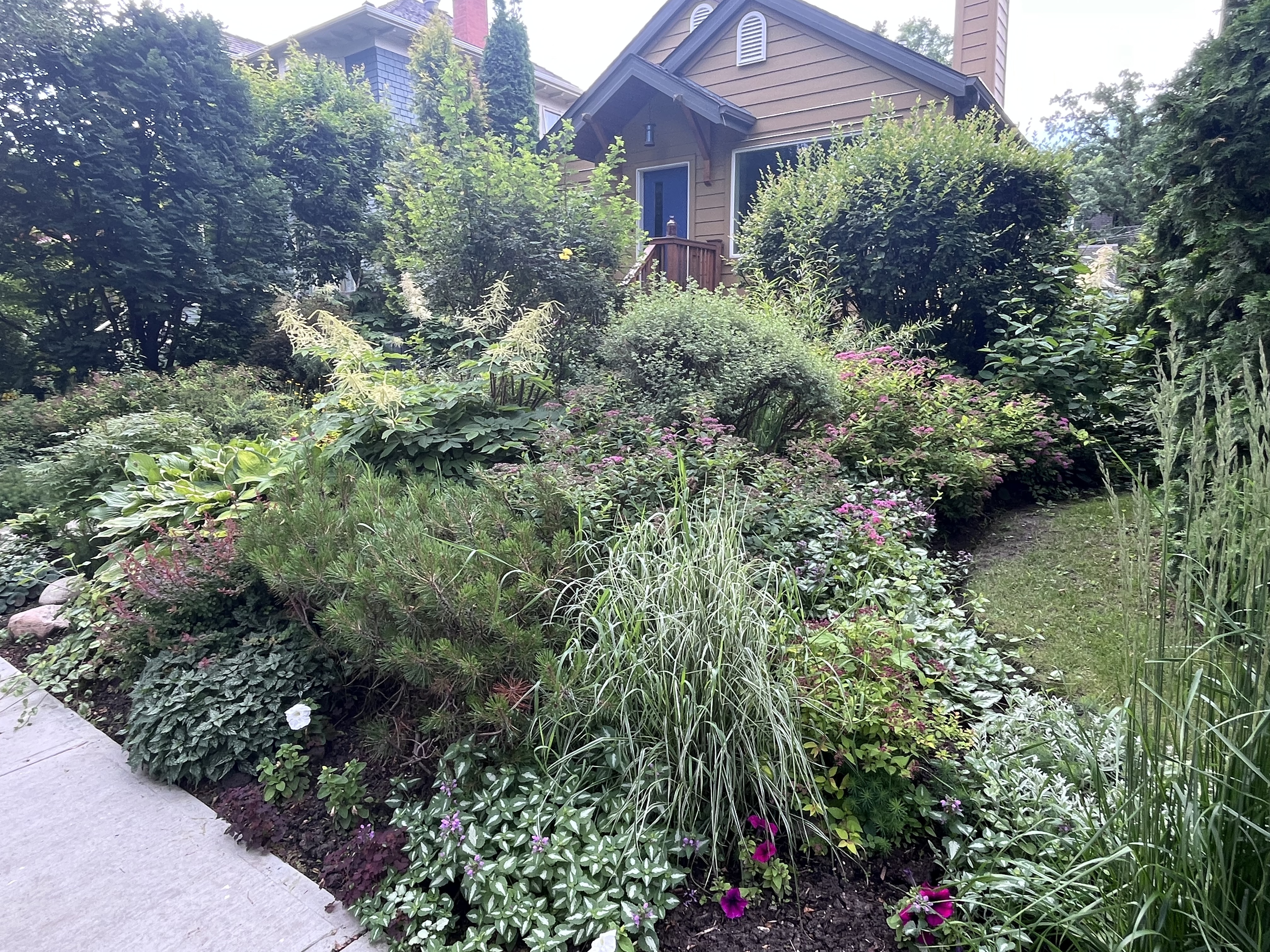
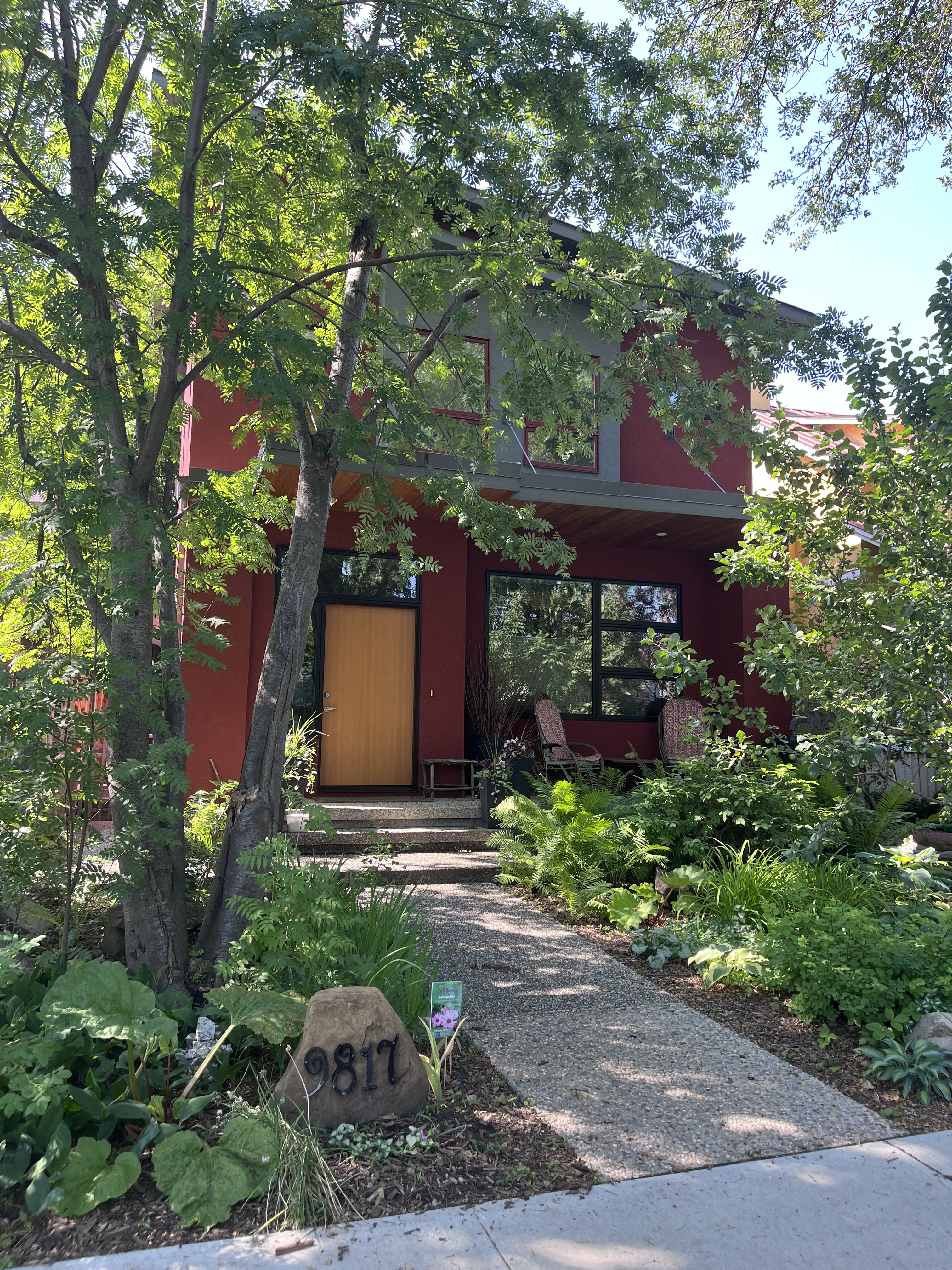
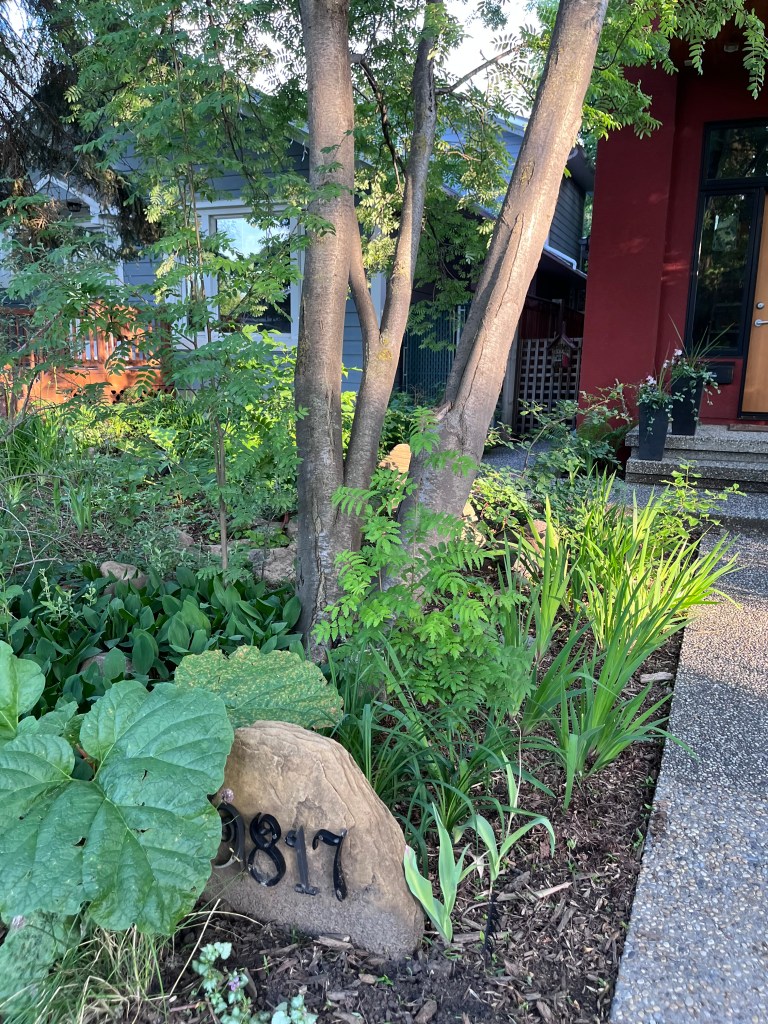
This garden sneaks up on you. No showy blooms or dramatic announcments. This north-facing shade garden is defined by the beauty of varied texture and foliage. A range of leaf colour and shape stitch a rich quilt that shifts from greens to bronze to cream. Two trees provide shelter. The smaller arcing branches of a beautifully pruned apple grow near the deck. A mountain ash shades the wide sidewalk. House numbers hammered into a large rock and the lines of weathered logs add to the naturalized elements.
Key to the garden is the sunken dry river rock bed that curves and slopes into a gentle hollow. This decorative and functional element makes space for any excess rain to soak into the rocky surface, mulch, and roots. This practicality announces itself especially this year when when extreme summer storms have flooded Edmonton’s homes and streets.
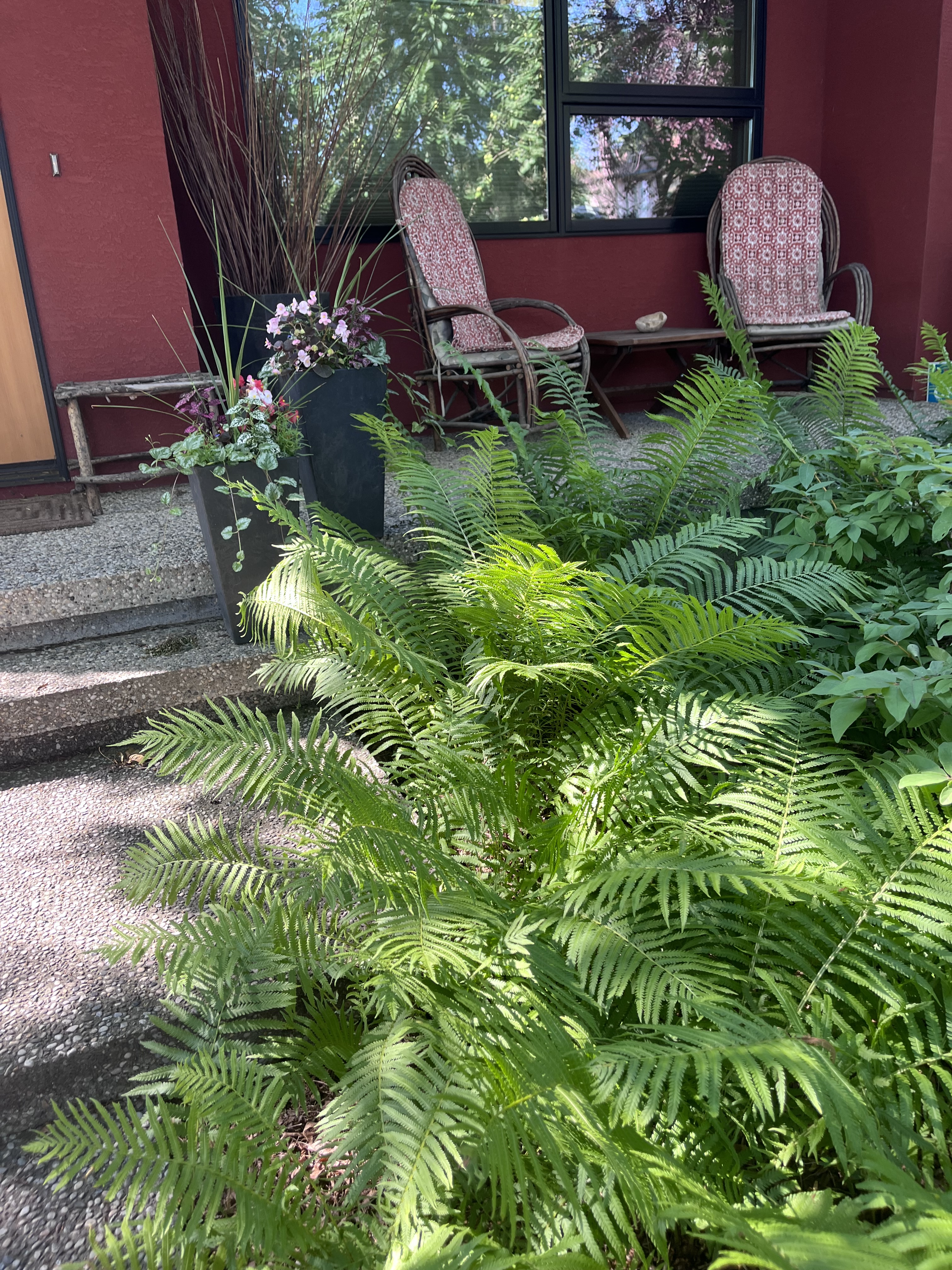
The glow of a plainspoken light wood front door contrasts with the soothing depth of red stucco. The exposed aggregate concrete of sidewalk and stairs echo the rocky river bed.
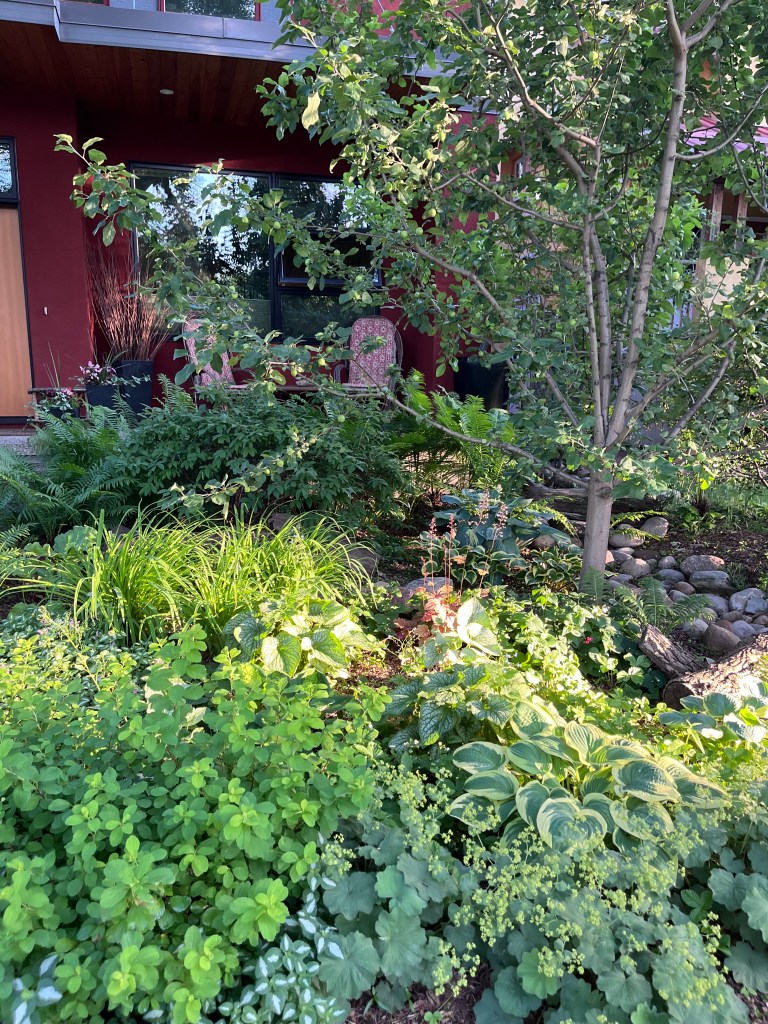
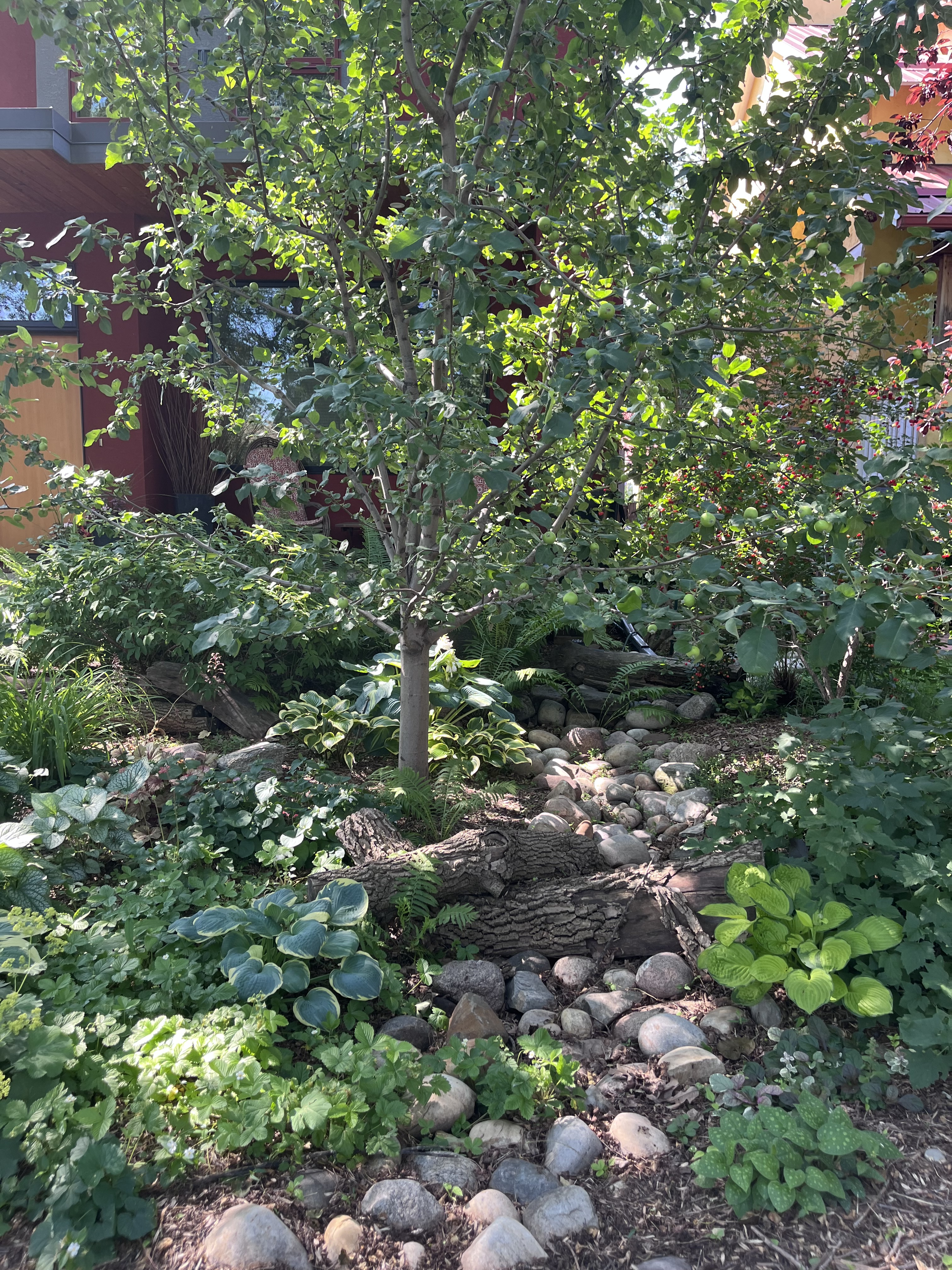
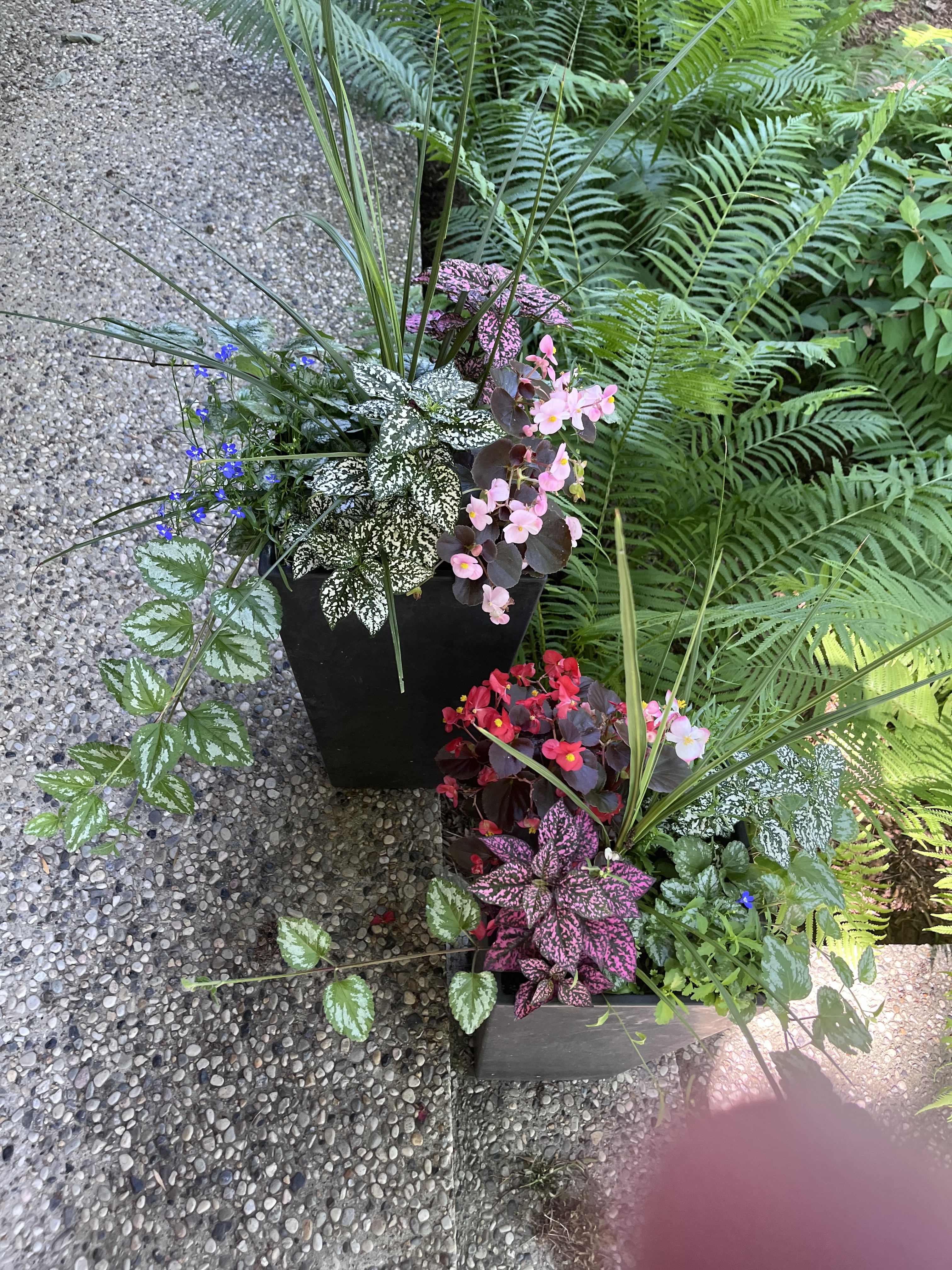
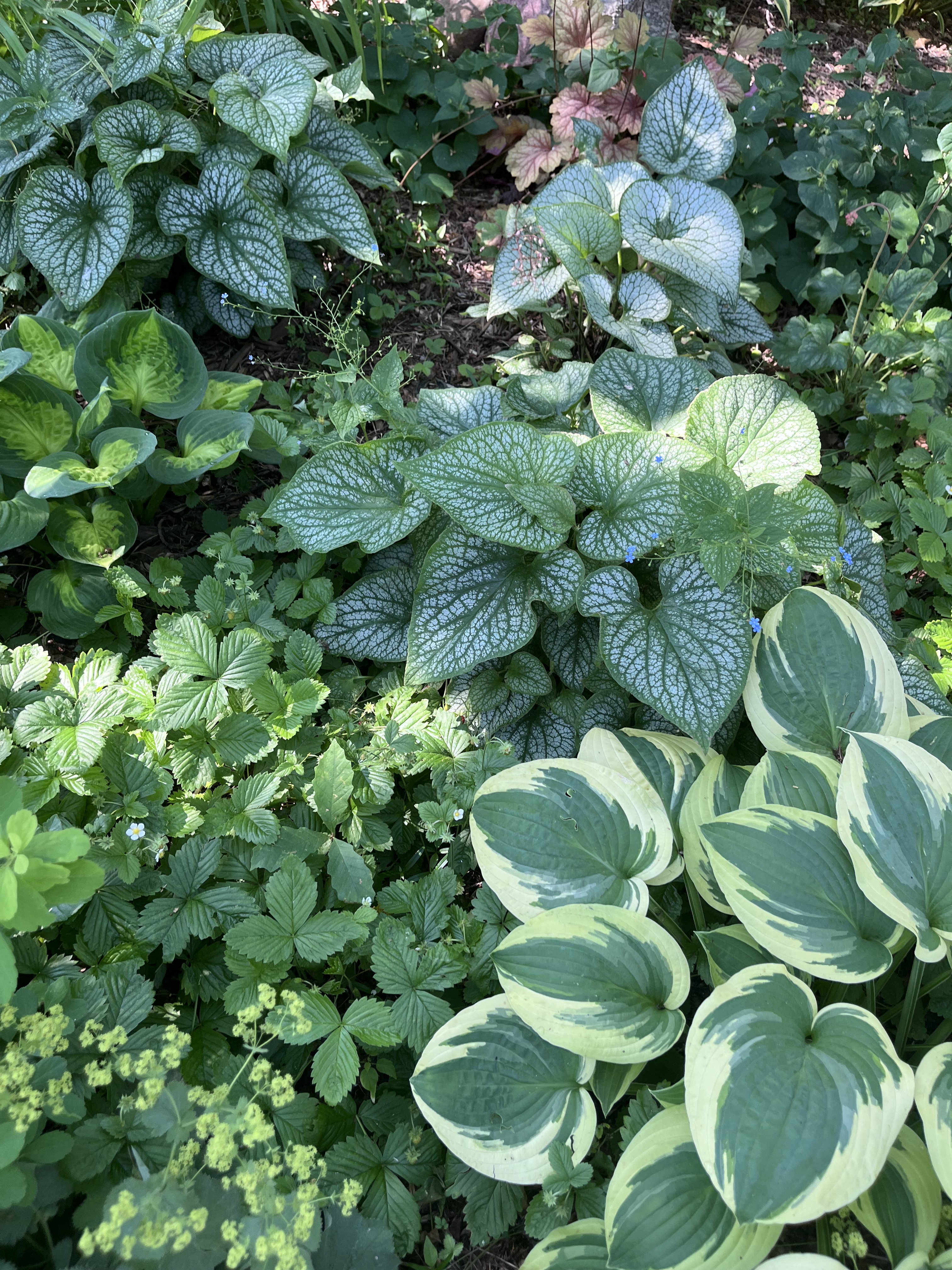
Varied grasses give shape to the garden’s architecture with arcing and spiky shapes. Perrenials include silver-veined Siberian Bugloss, bronze heuchera or coral bells, frothy ladies mantle, round-leaved bergenia, perenial geranium along with variously coloured hostas from blue-green to gold-veined and cream-edged.
The low borderless deck is reached by three stairs. Here and on the deck, a half dozen identical tall black pots house a subtle collection of annuals: polka dot plants, blue lobelia, and wax begonias. Nearby two beautiful low-slung chairs provide a restful place to greet passers by or contemplate the day. Clumps of ostrich fern welcome us.
6. The Hidden Woodland Garden – 9725 90 Avenue
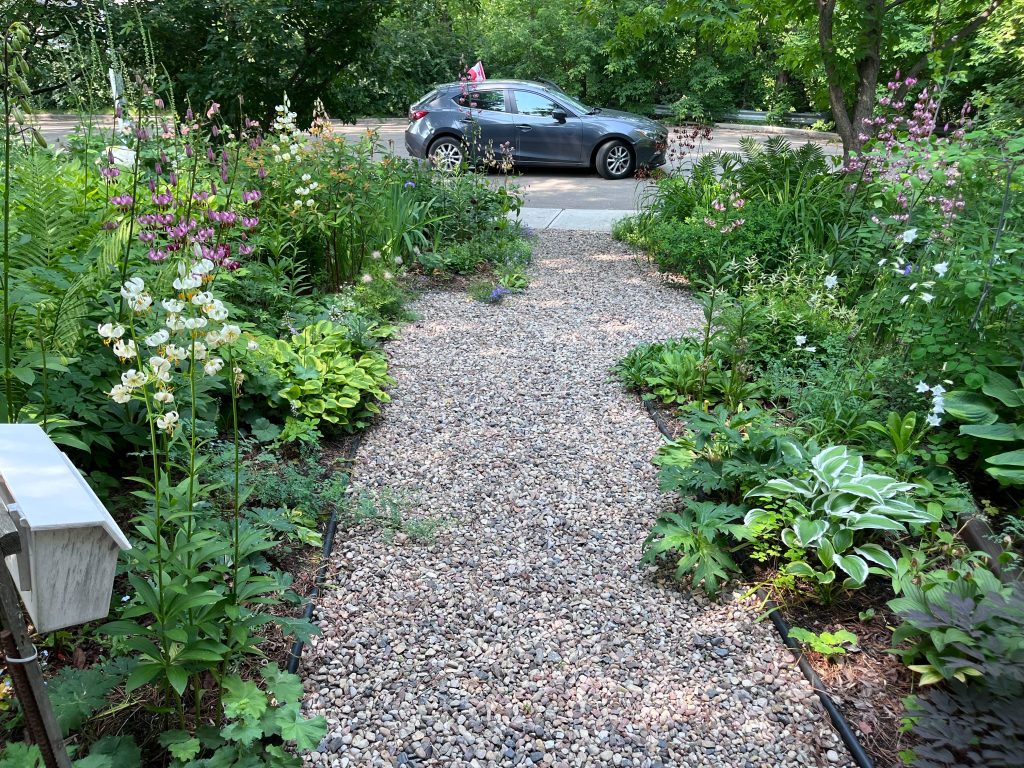
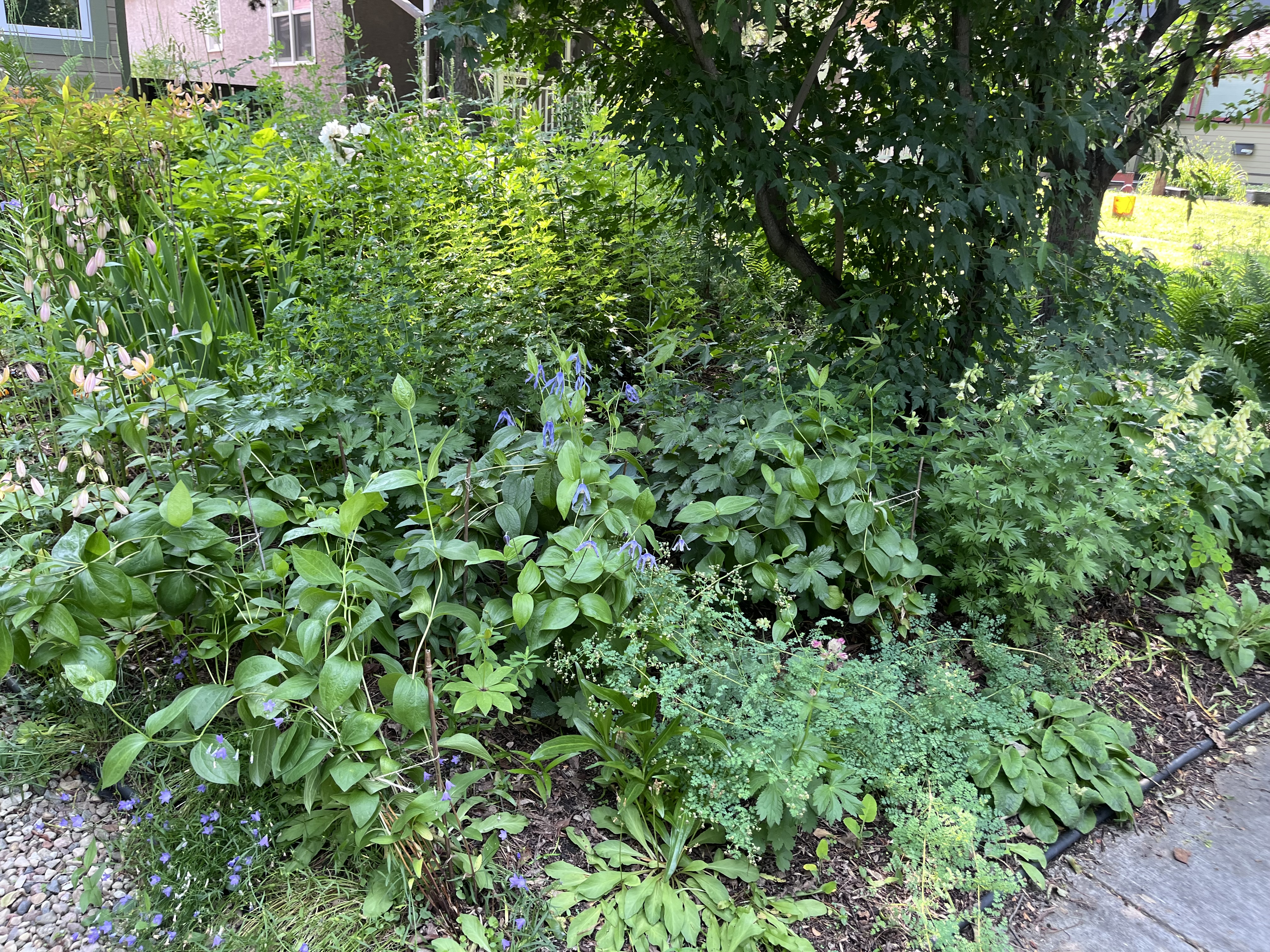
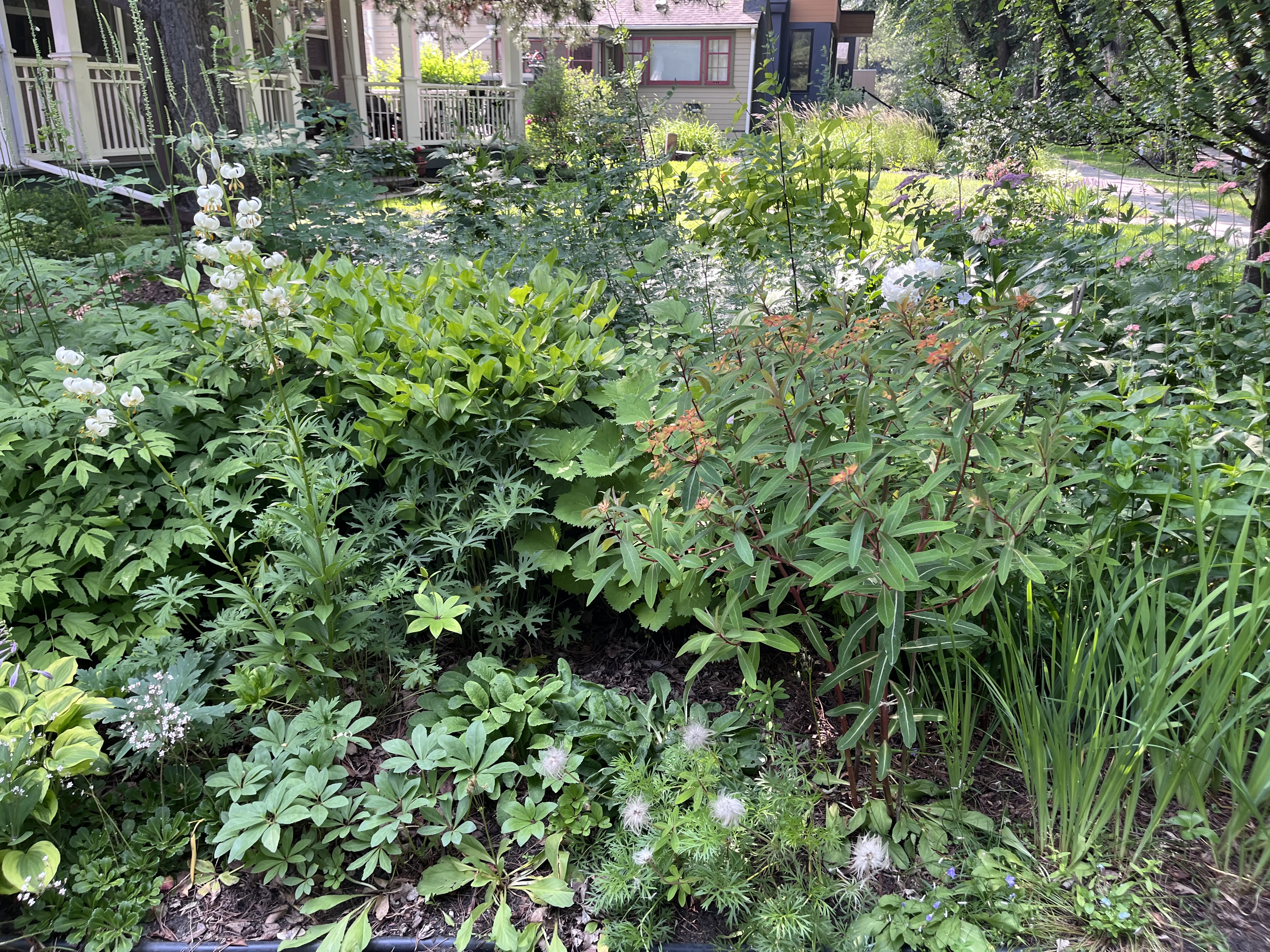
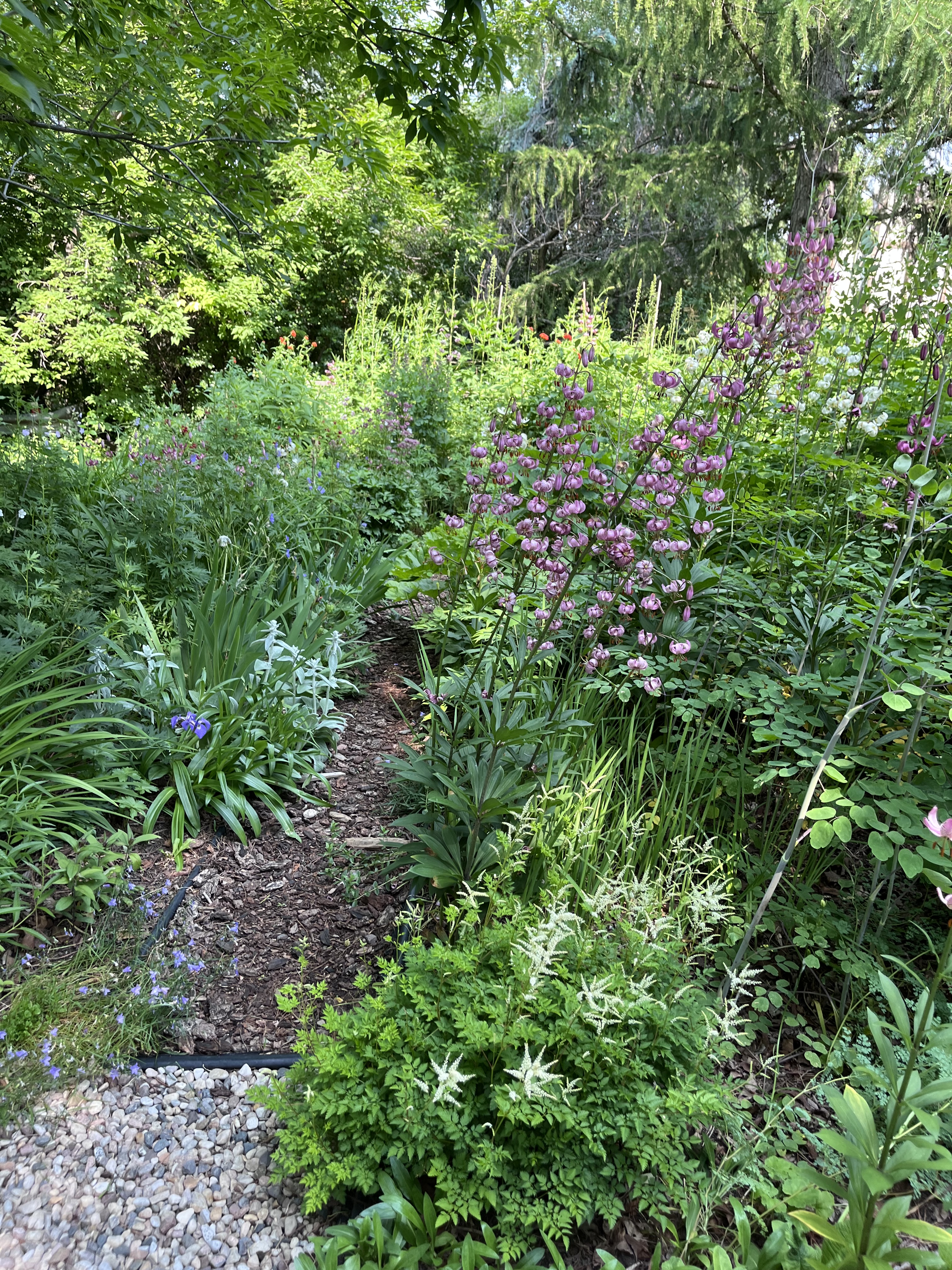
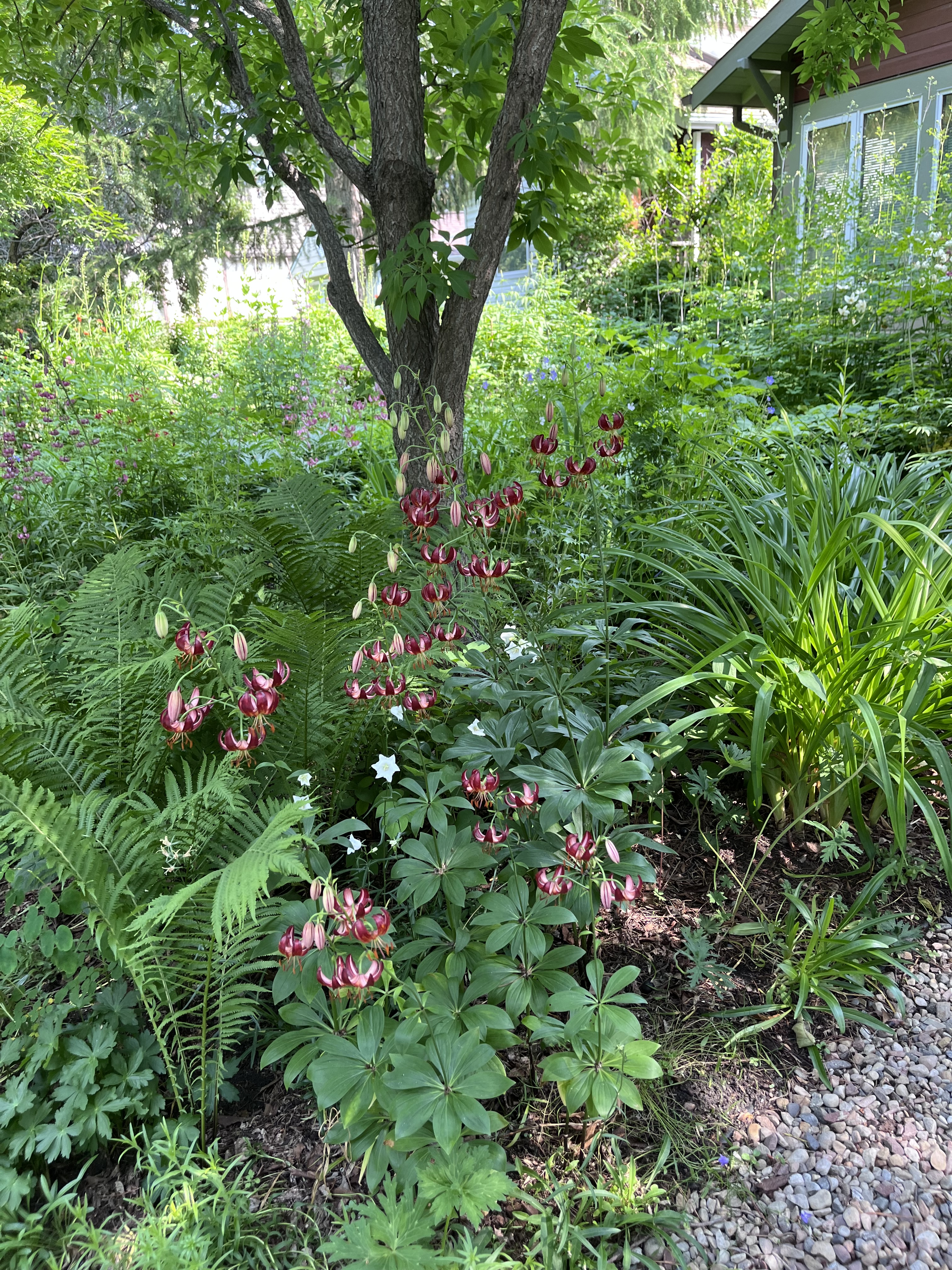
At the end of the block, almost in the woods, the next to last house features an understory, an established tangle of perrenials. A tidy but untamed treasure. Scarlet Maltese Cross towers above. Lilies and Ostrich Ferns meander. The delicate Western Blue Virginsbower and Masterwort Astilbe, columbines and Meadow Rue, Lamb’s Ear, Forget-me-nots, Monkshood, Harbebells, Bearded and Siberian Iris, Hostas, poppies, and peonies give the garden its unique multifloral character. The standout magenta Martagon Lily otherwise known as the Lily of Istanbul or Dragon Lily naturalizes in our winter cold. Botanical myth tells us this lily protects against evil spirits. So much mystery in this magical place.


7. The Pink House Shade Garden – 9707 89 Avenue
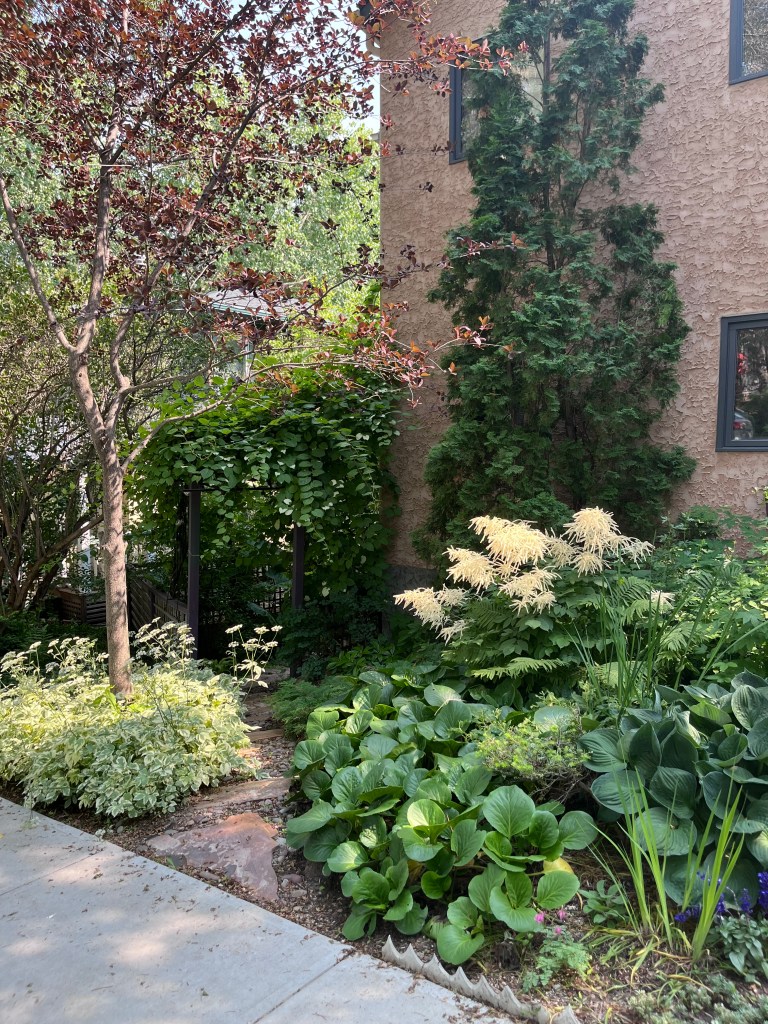
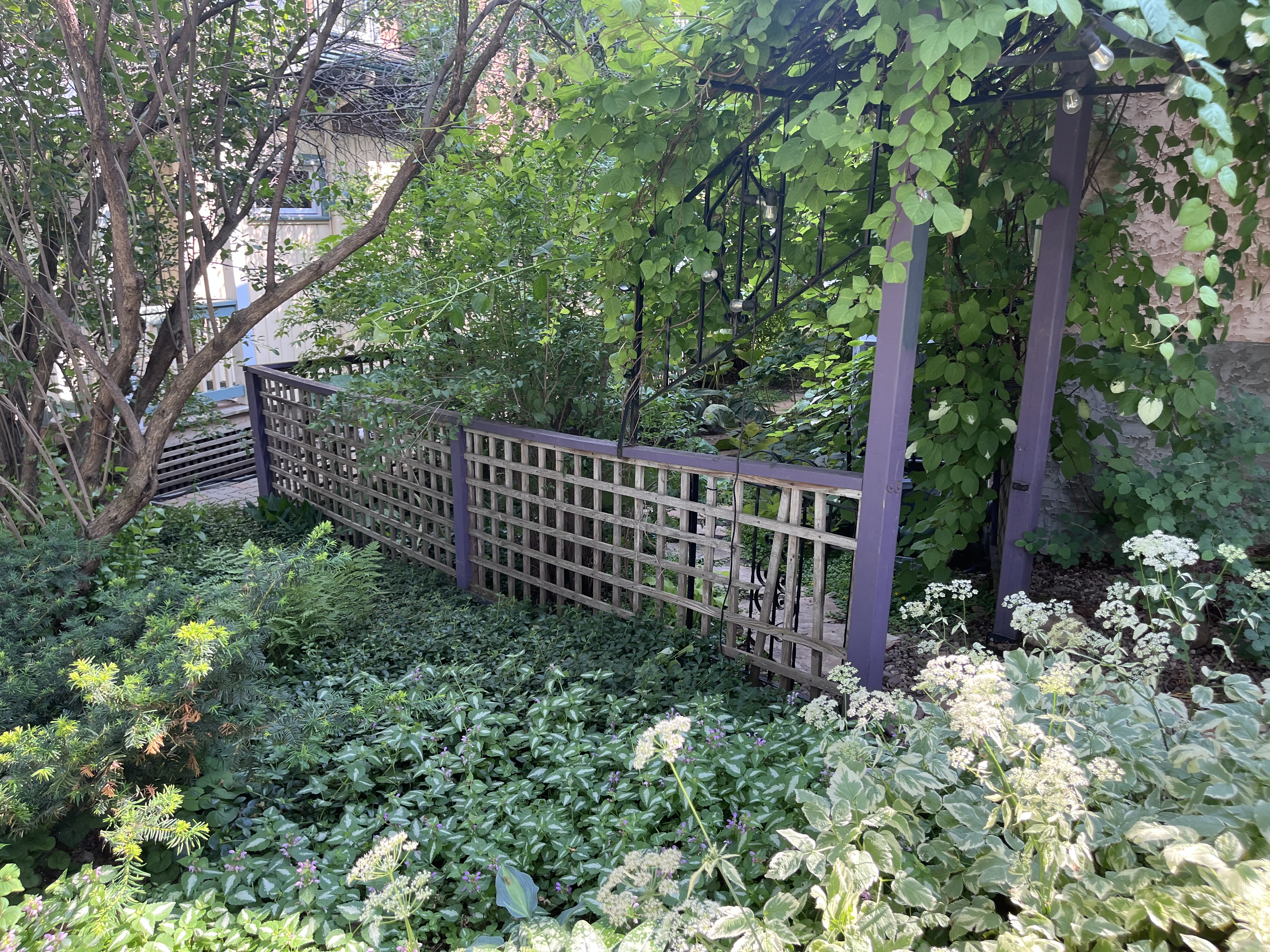
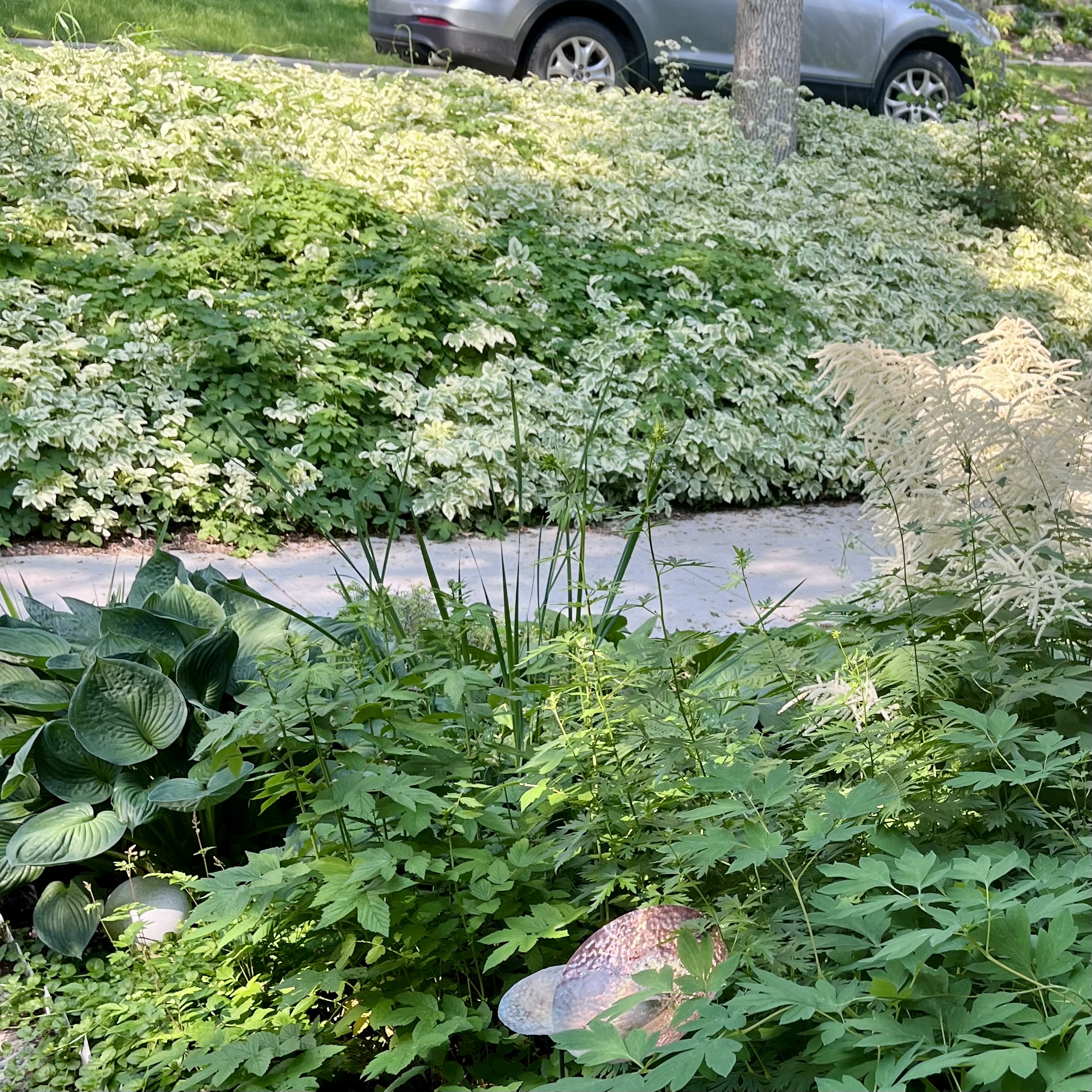
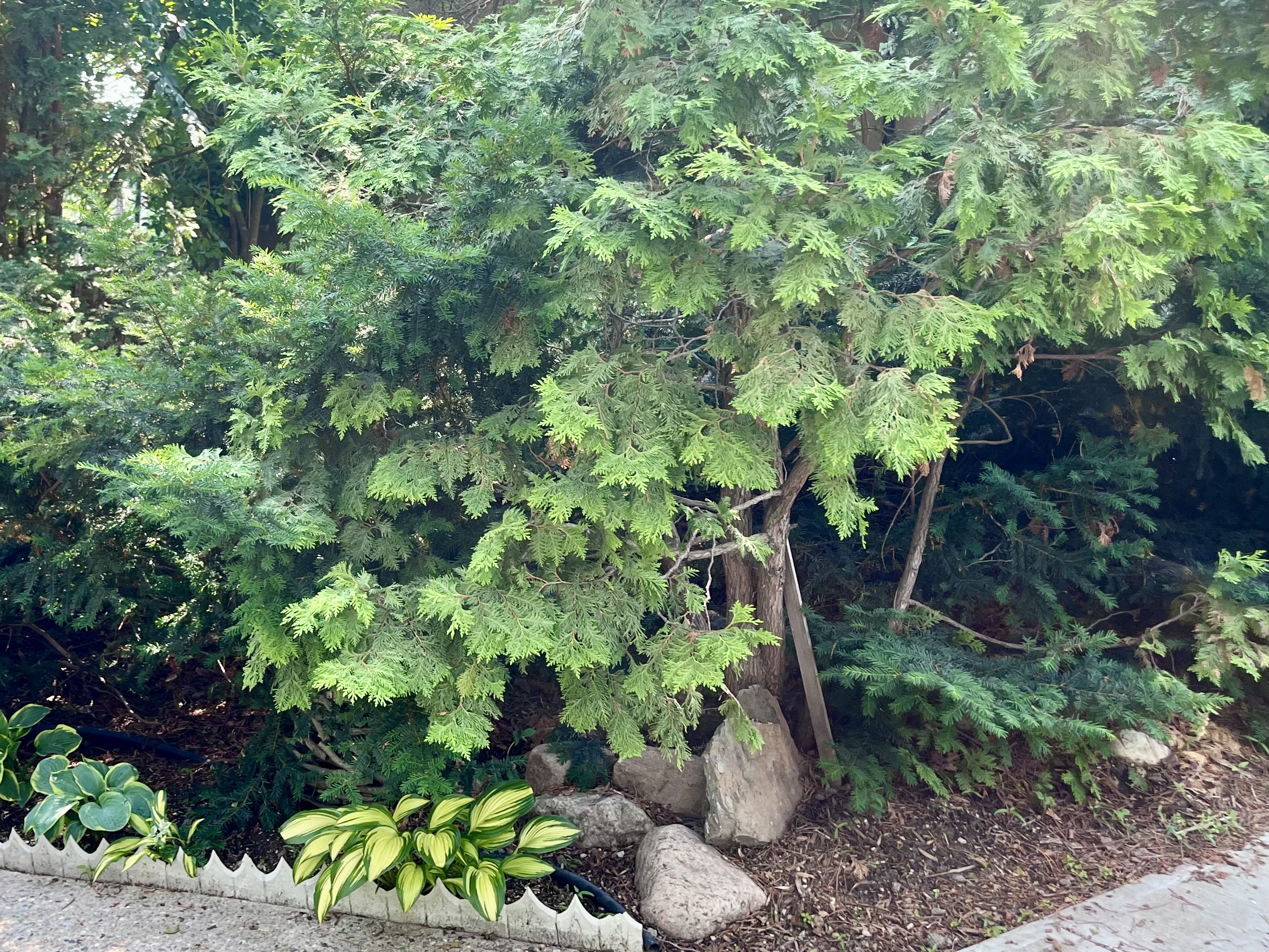
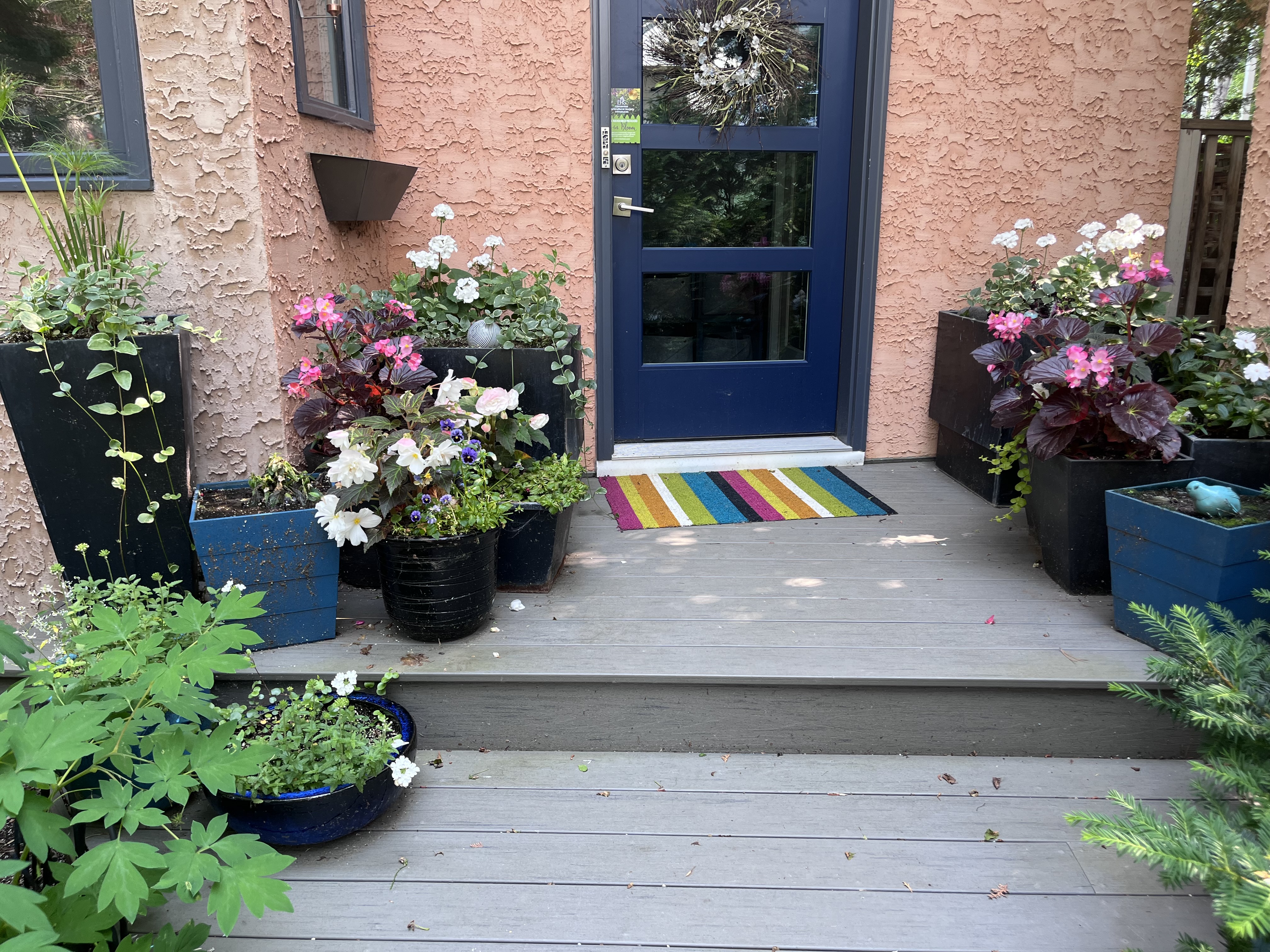
The coral pink stucco house with a deep blue door glows behind a line—the lush variegated goutweed boulevard bed. This ground cover is both persistent and tough. The gardener has planted layer upon shaded layer. The effect ripples with hidden depths. Cedars, yews and a purple Schubert chockecherry tree grow here. A vine-covered low fence and arbor lead to a small side garden. Dutchman’s pipe or kiwi vine clamber on the wooden frame. Blooming pansies, umbrella-like green papyrus, white geraniums, vines, and bright begonias peek from porch pots. Feathery white goatsbeard fronds contrast with palm-sized waxy bergenia. Bleeding heart stems along with lamium and delicate sweet alyssum spill out from the path. Zig-zag concrete edging contrasts with the softening effects of ferns, hostas and other underplanted growth.
8. Minimalism Maximized – 9015 98 Street
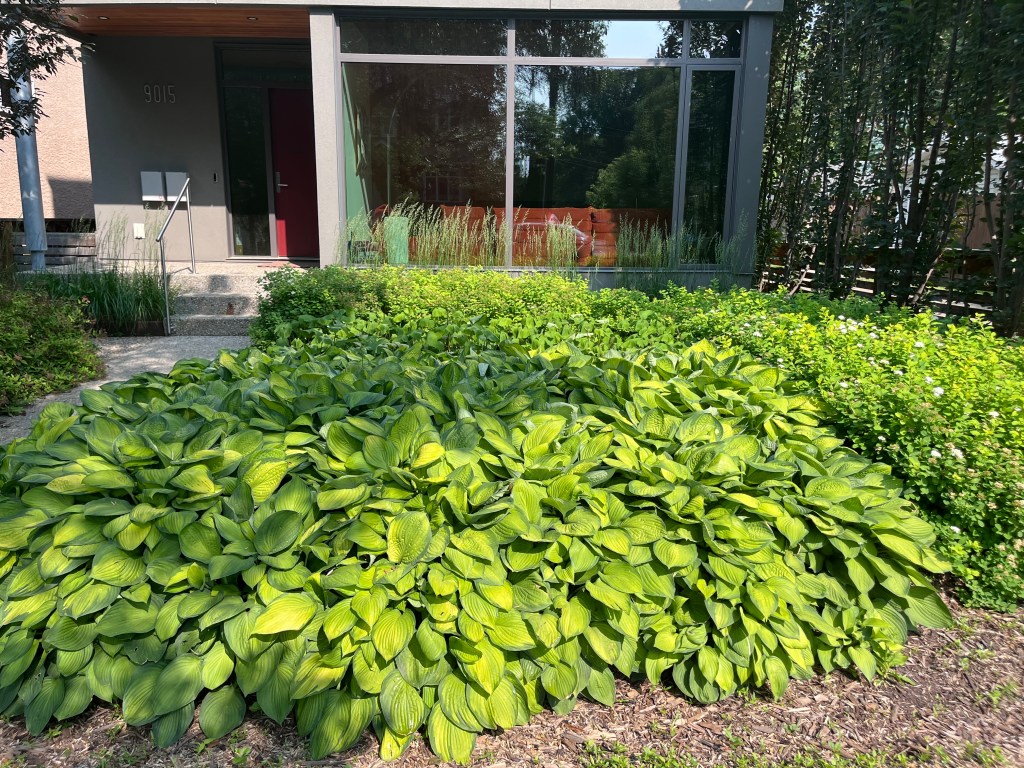
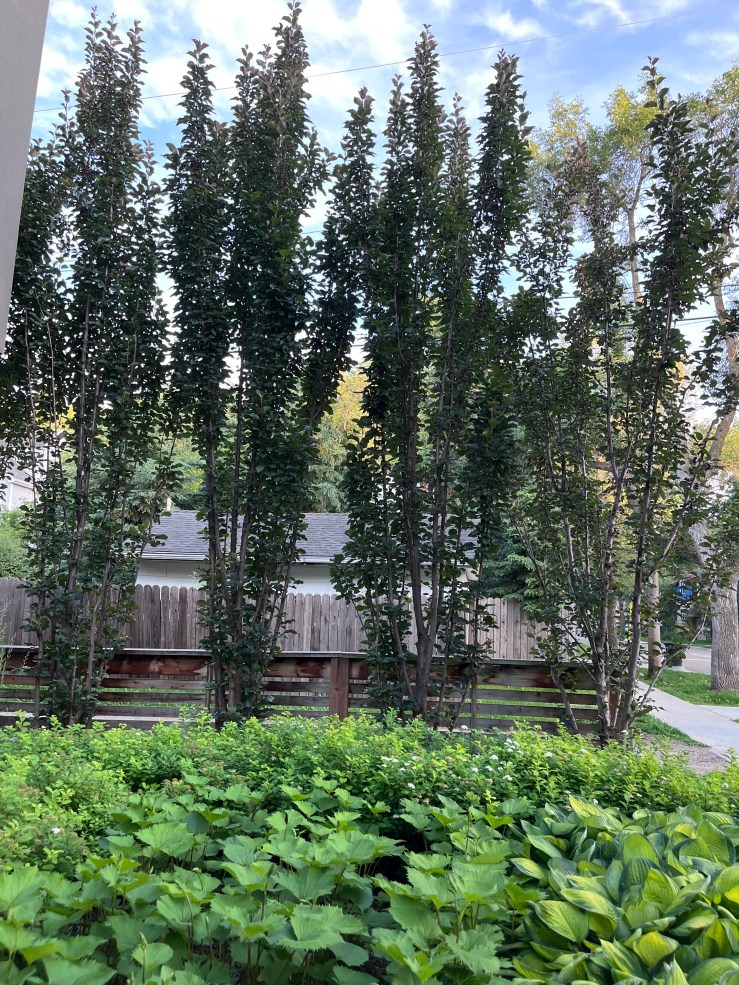
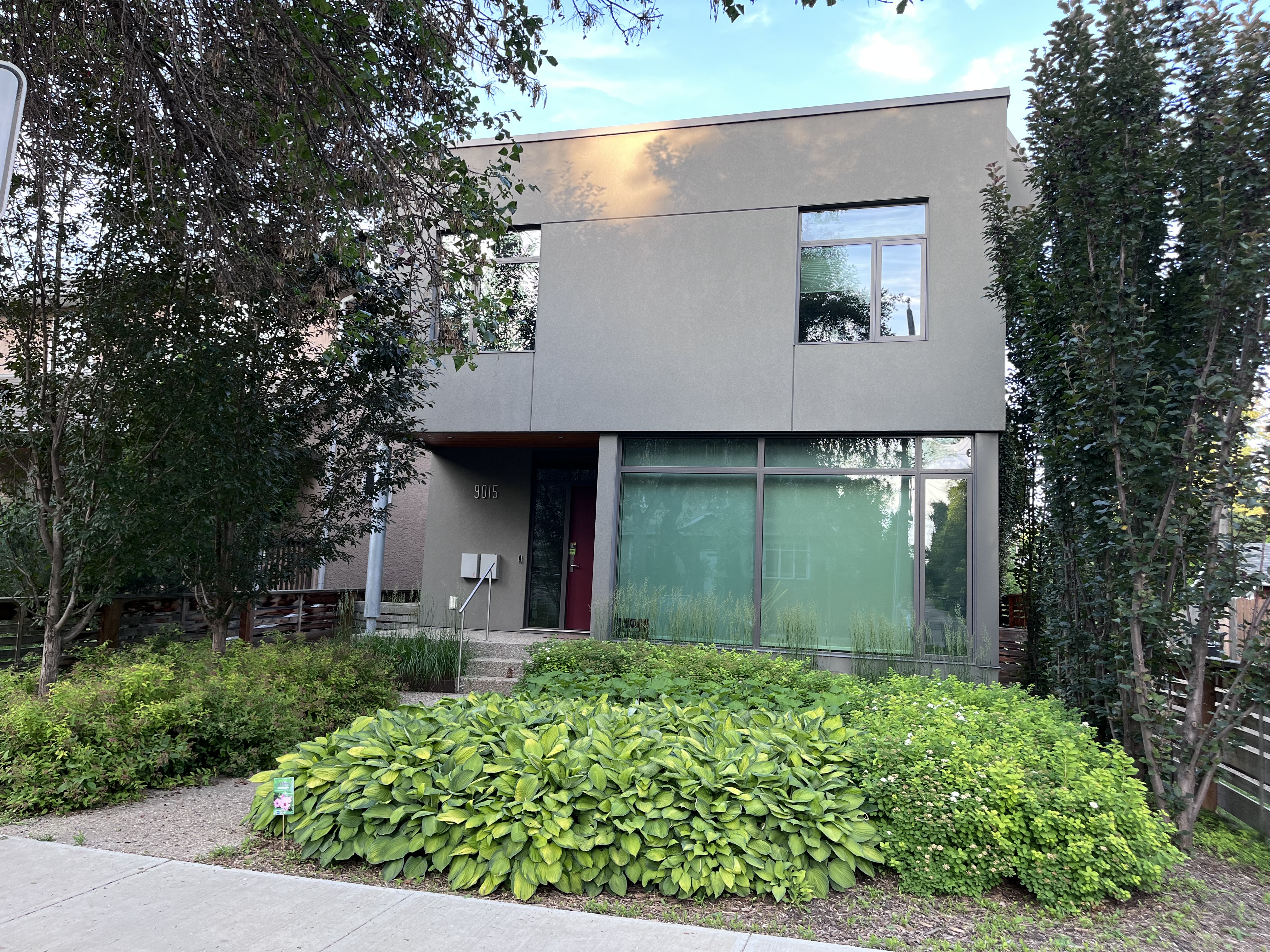
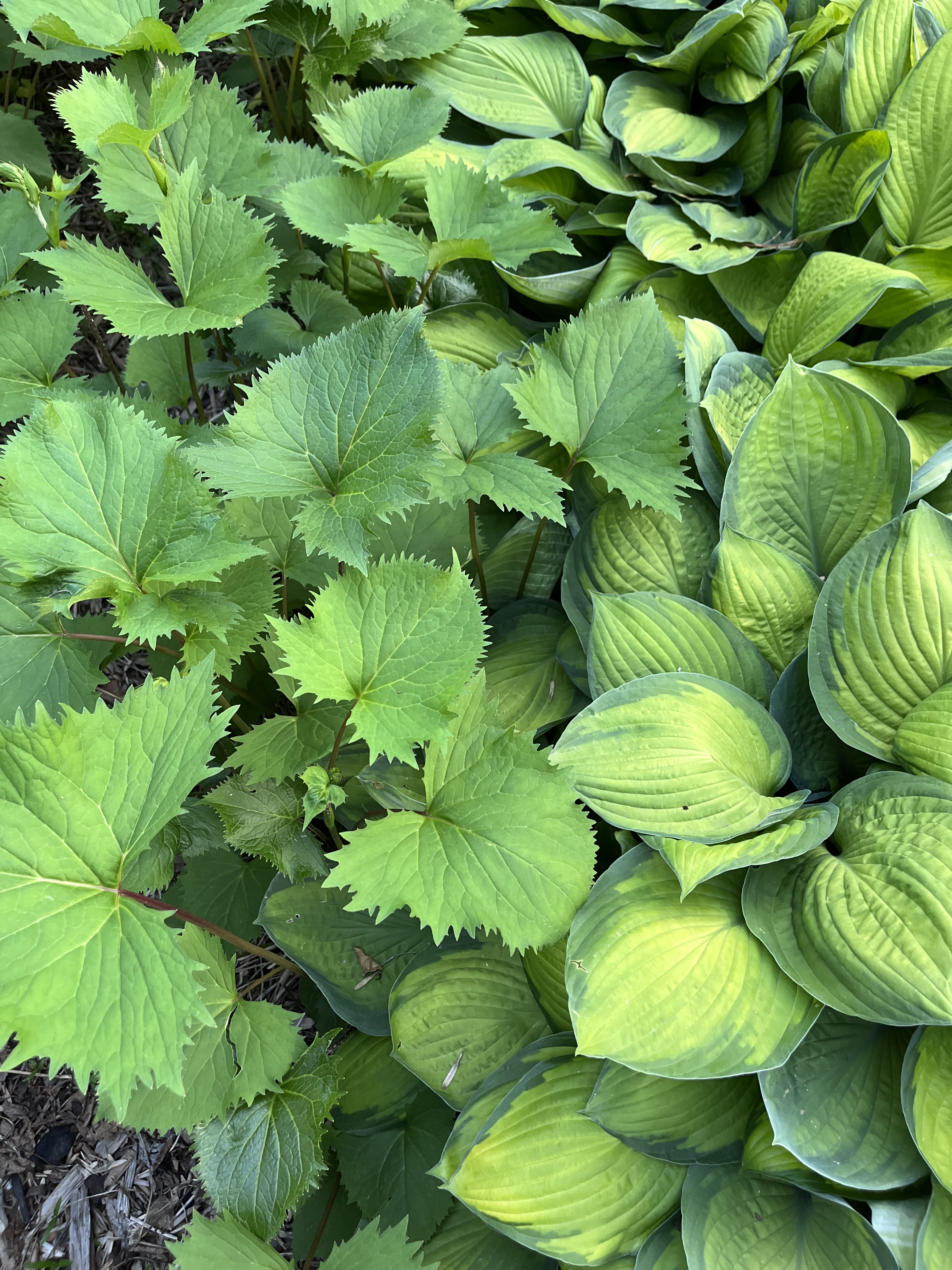
Japanese meadowsweet (spirea japonica) line the two edges of the lot, white on one side and pink on the other. A row of tall grasses wave the length of the foundation and front windows. Twin purple crabapple trees tower over the north side side. A line of clacking columnar aspen shade the the south. Darker green Leopard Plants are almost hidden in the middle patch untiil until you walk towards the steps. Soon enough the golden long-stemmed flowers will bloom daisy-like above their heart-shaped leaves. Lime green hostas slump in scalloped rounds along the sidewalk.
These row on row of varied identical shapes remind me of Gertrude Stein’s love of repetition and difference. “A rose is a rose is a rose,” she explained. Repetition becomes insistence. One green plant after another. A serial visual rhythm reminding me human design pleases no less than the gorgeous chaos of a naturalized space or wild zone.

9. The Blue Poppy Cottage Garden – 9727 93 Avenue
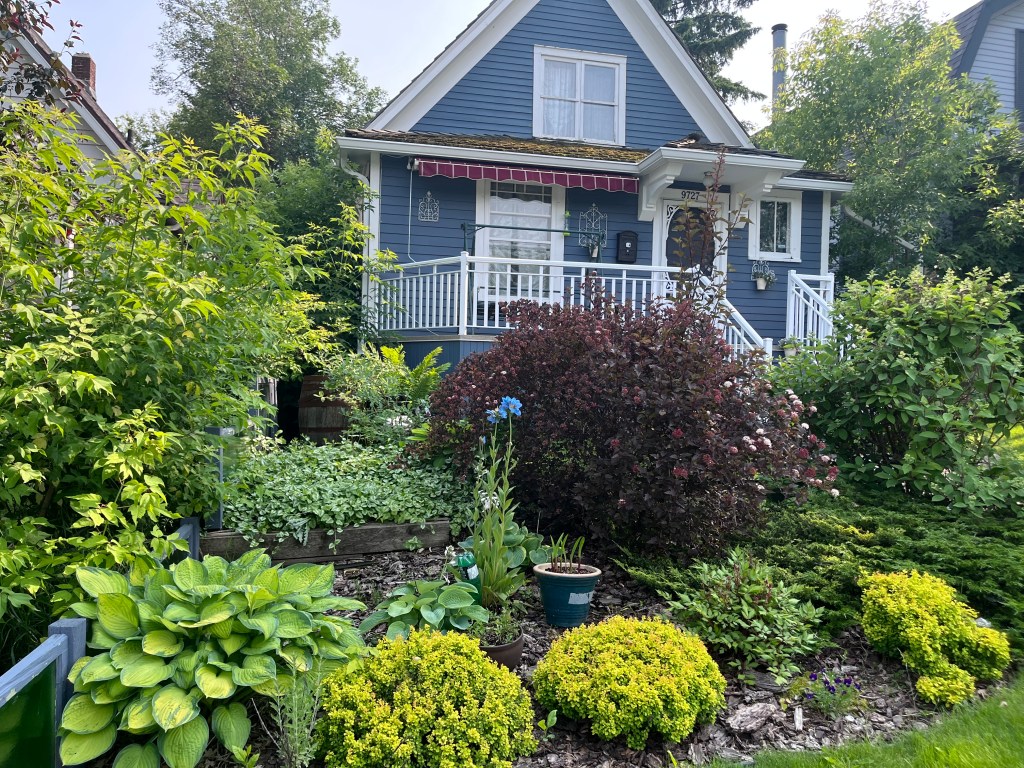
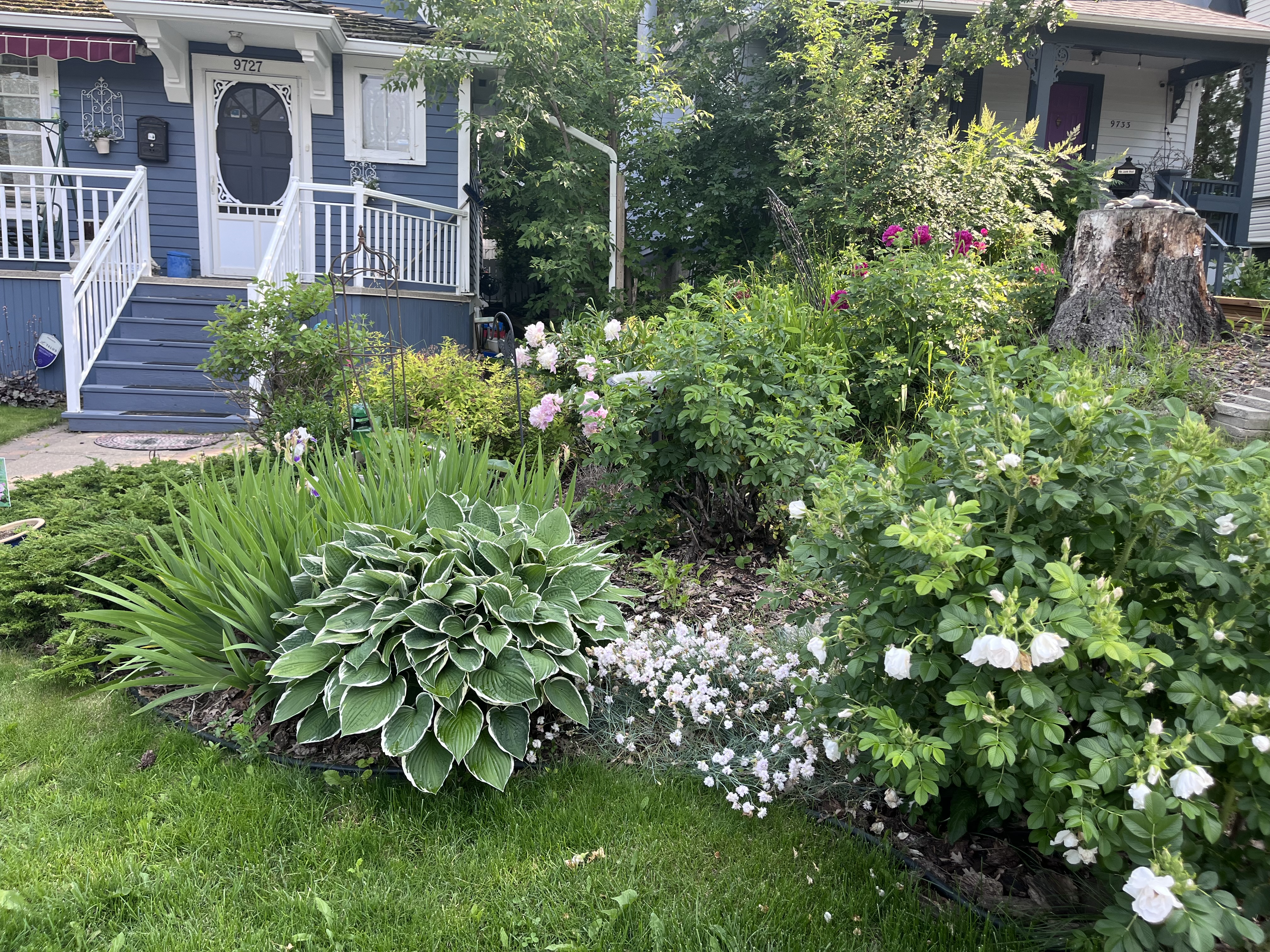
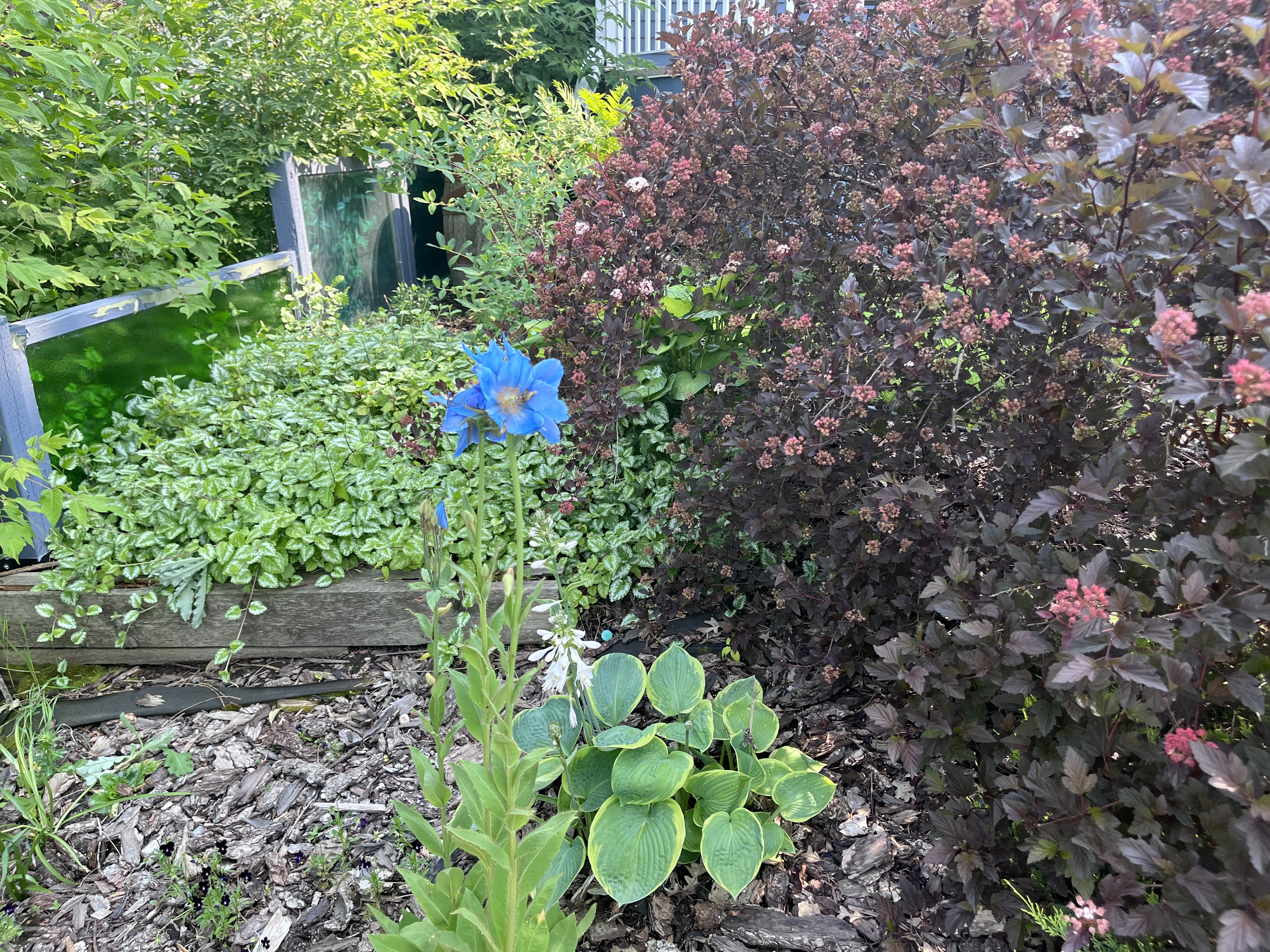
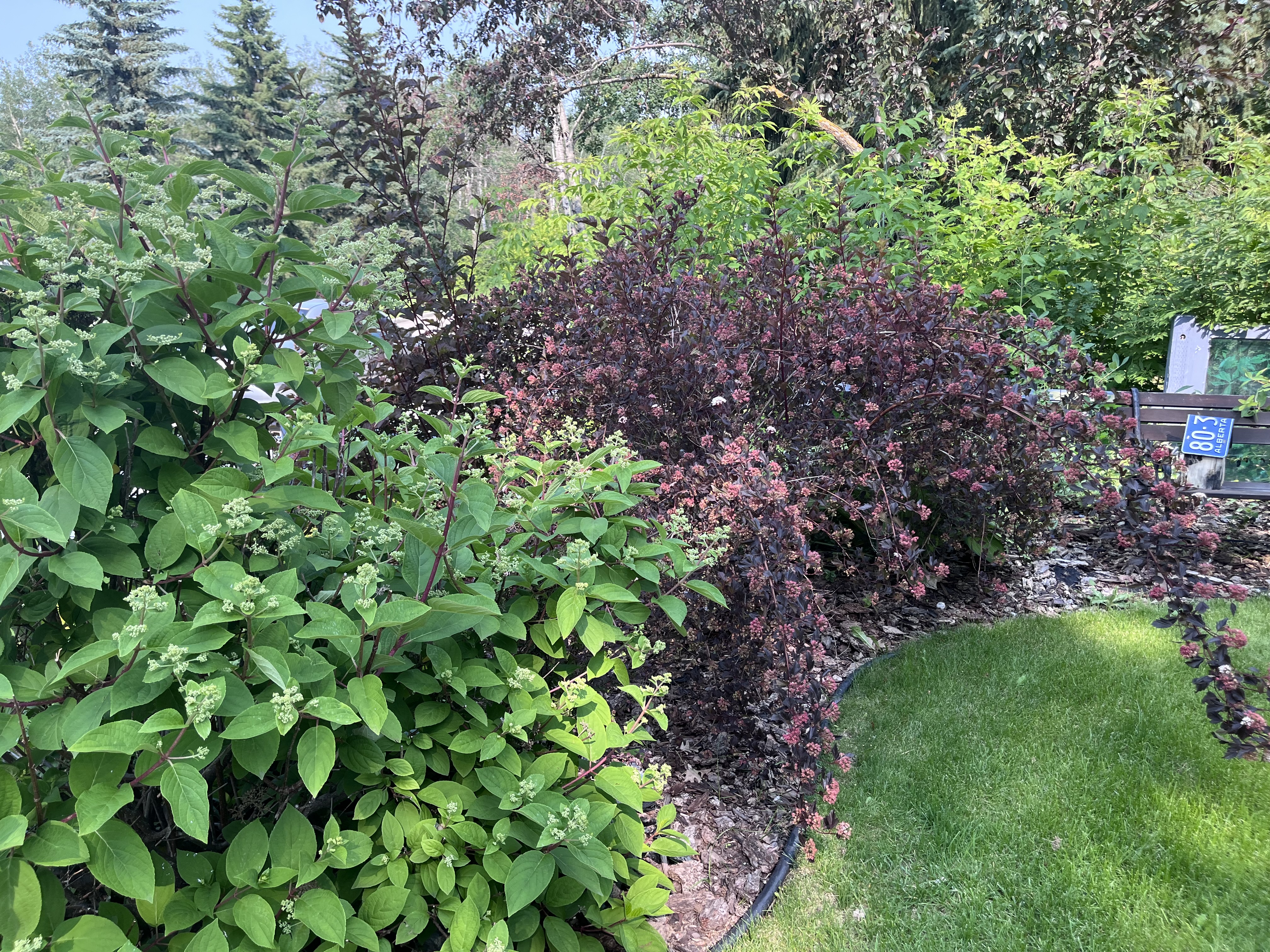
This street leads to the ashphalt pathway that rims Millcreek Ravine. Two houses before the end of the road, a blue cottage with an open-air white porch sits tucked away on one side of the street. On the other is a narrow wide park perfect for training puppies or chasing frizbees. In this garden, bushy Goldflame Spirea and chartreuse evergreen Golden Barberry drift towards the brick walkway and stairs. A stunning blue opium poppy is framed mid-distance. A birdbath is positioned near fragrant Mock Orange and Honeysuckle. A pinkish panical hydrangea blooms on new wood with cone-shaped blooms, a variety that tolerates both cold and sun. Our arctic temperatures make the hardy shrub rose a favourite. It thrives where more delicate rose varieties perish. Here the Blanc Double de Coubert white rose is a beautiful specimen. Silvery heuchera, pink dianthus, bearded iris and pink peonies also bloom. Hostas and ferns add sculptural leaves. And a white lacecap climbing hydrangea grows above the goutweed and lamium groundcover.
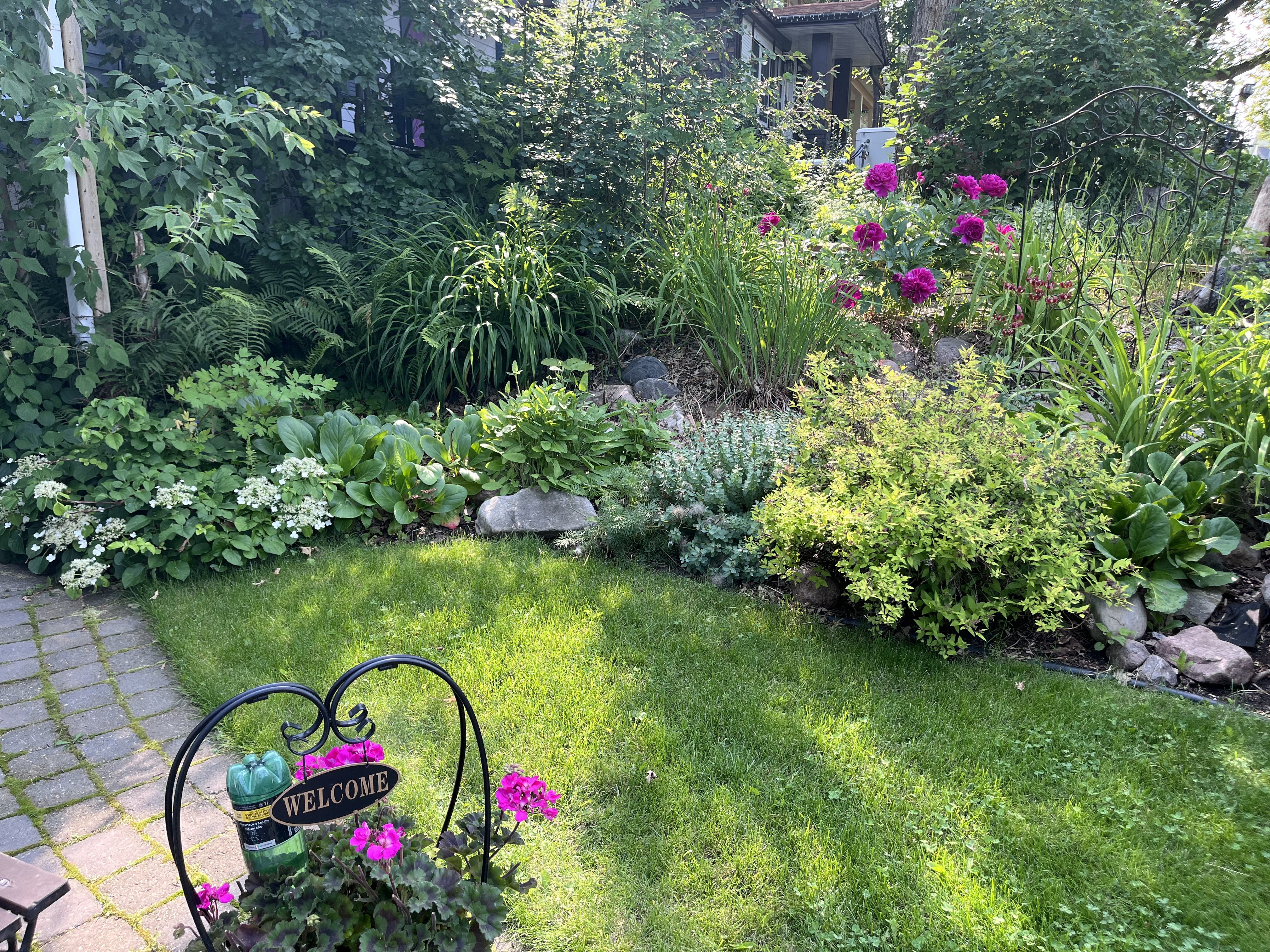
10. Xeriscape Corner – 9803 93 Avenue
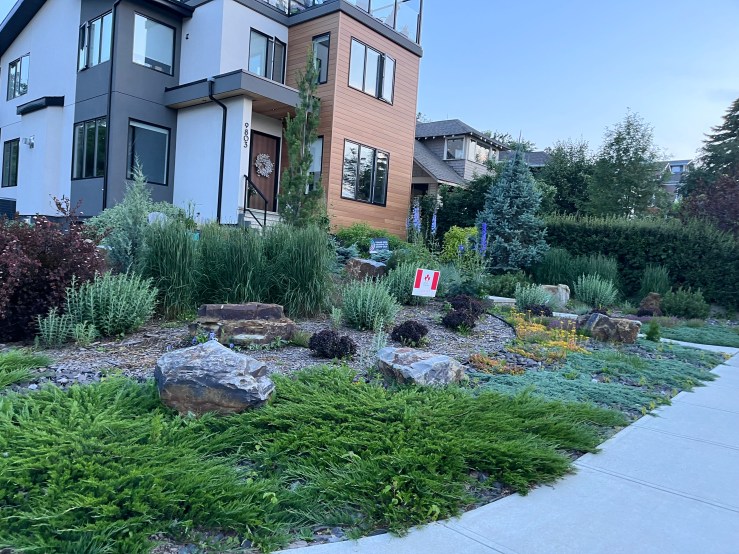
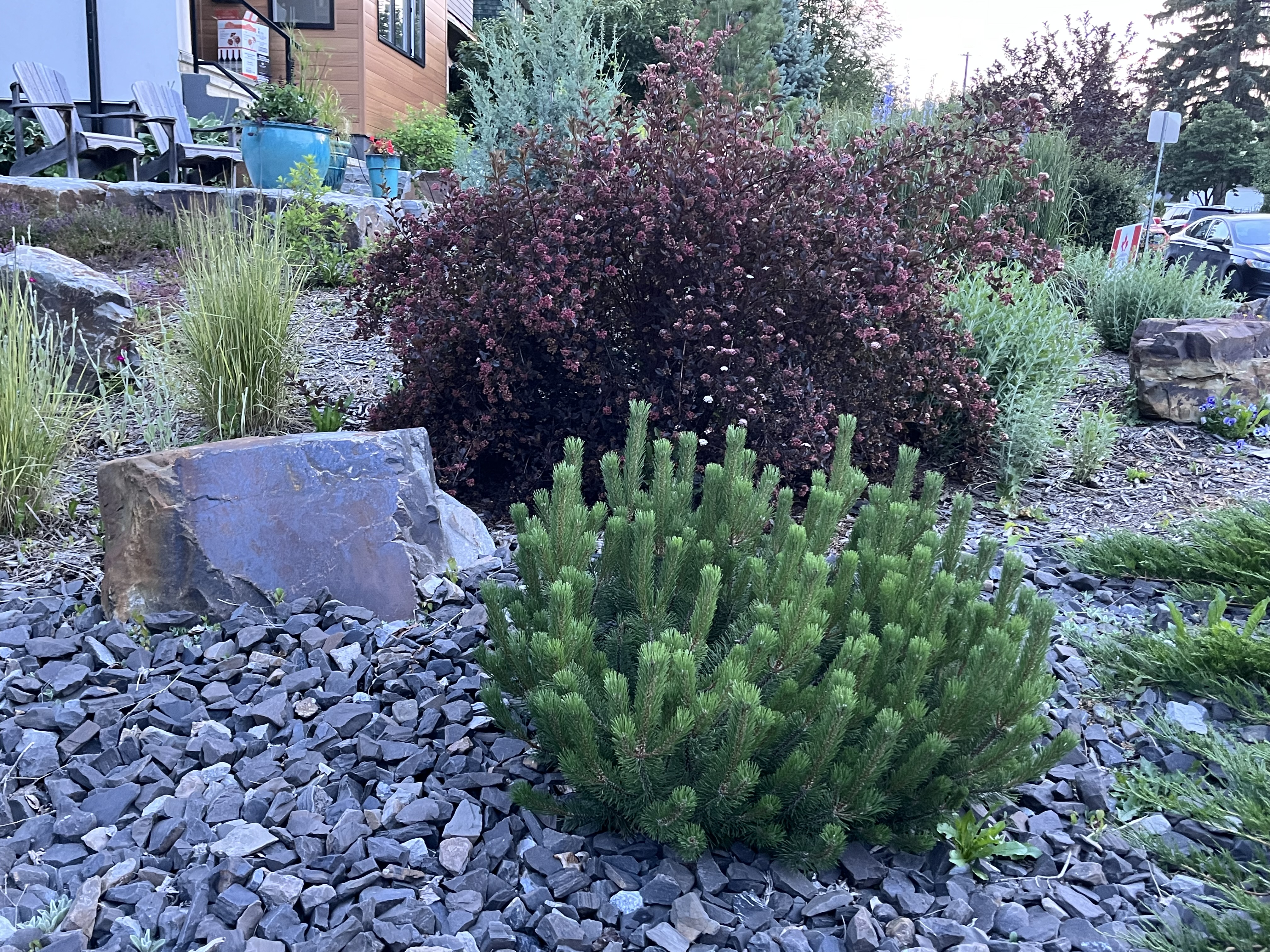
A towering new build requires an anchor and this stony shore grew year by year with crushed rock mulch and drought-tolerant plants. Tall clumps of elegant grasses and low fescue varieties are at home in this hot dry space. Creeping junipers and purple thyme shape a low-slung carpet along the edge. A Dwarf Mugo Pine, Ninebark and Japanese Barbery are scattered between giant sculptural rocks and outcroppings. A handful of mid-height violet Russian Sage wave in the wind. Cobalt Delphiniums have blown into bloom from over the hedge. Golden sedum lights up the stony ground.
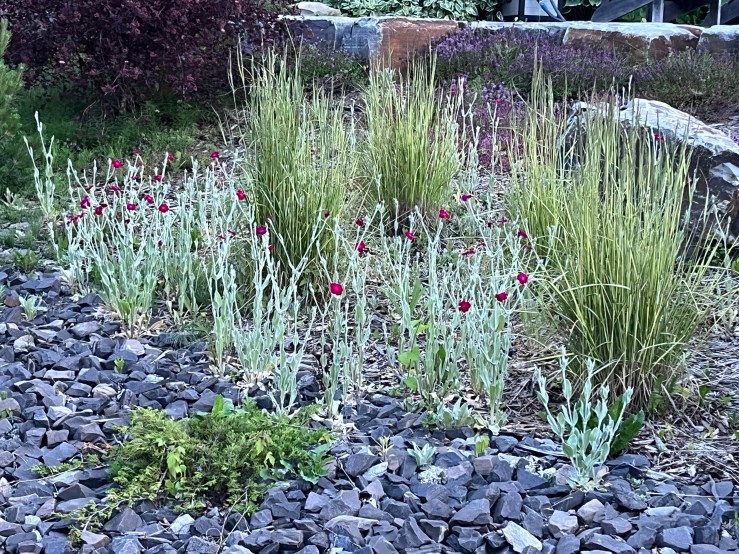
Rose campion with its velvety foliage conserves water in its leaves. These plants from a mother’s distant garden proliferate year after year. Even though this is a Mediterranean variety that’s not supposed to be viable in our Zone 4, this campion finds a home here no matter the weather.
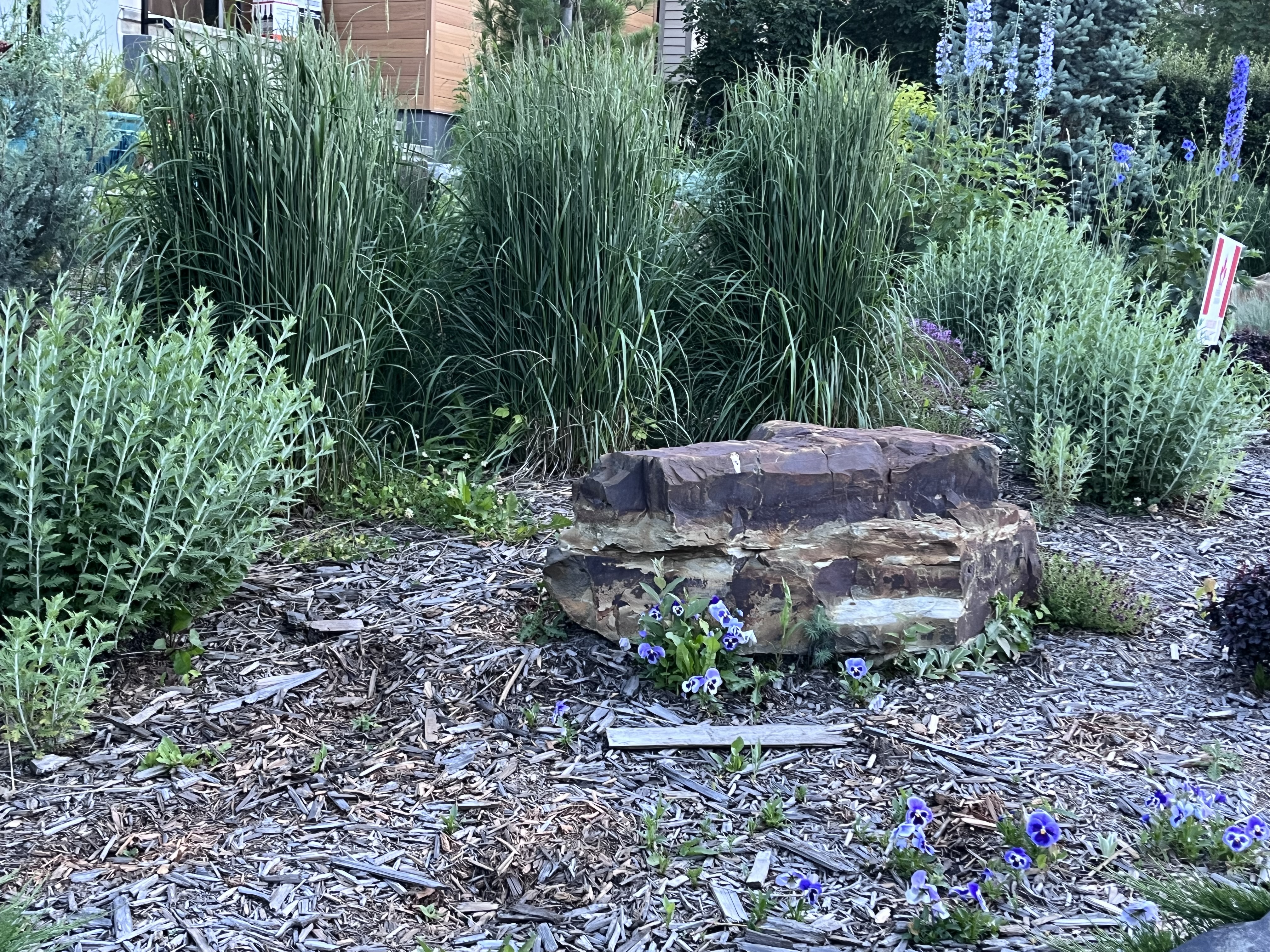
11. Hedging Abundance – 9805 93 Avenue
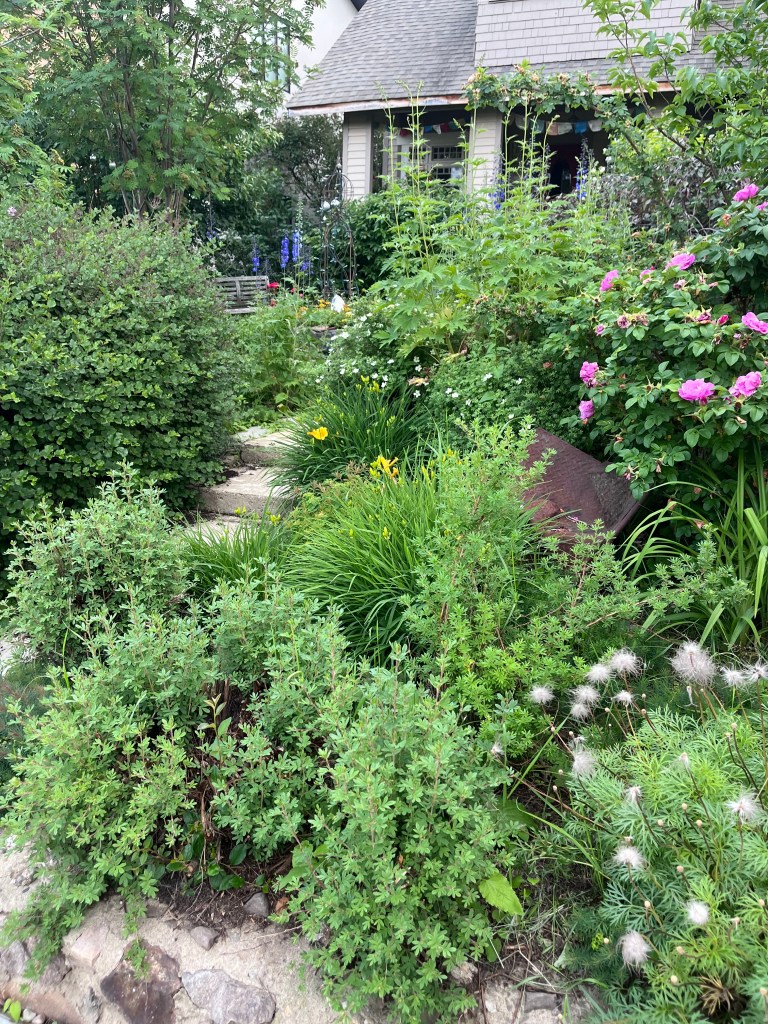
The garden disappears on one side behind a tall hedge of Cotoneaster and Korean Lilac. On the other a rusted steel bench is half hidden by bright yellow lillies and The frothy cotton seed pods of the purple Prairie Crocus, first to bloom in spring line the stone wall along with mounds of Potentilla that bloom white and yellow in time.

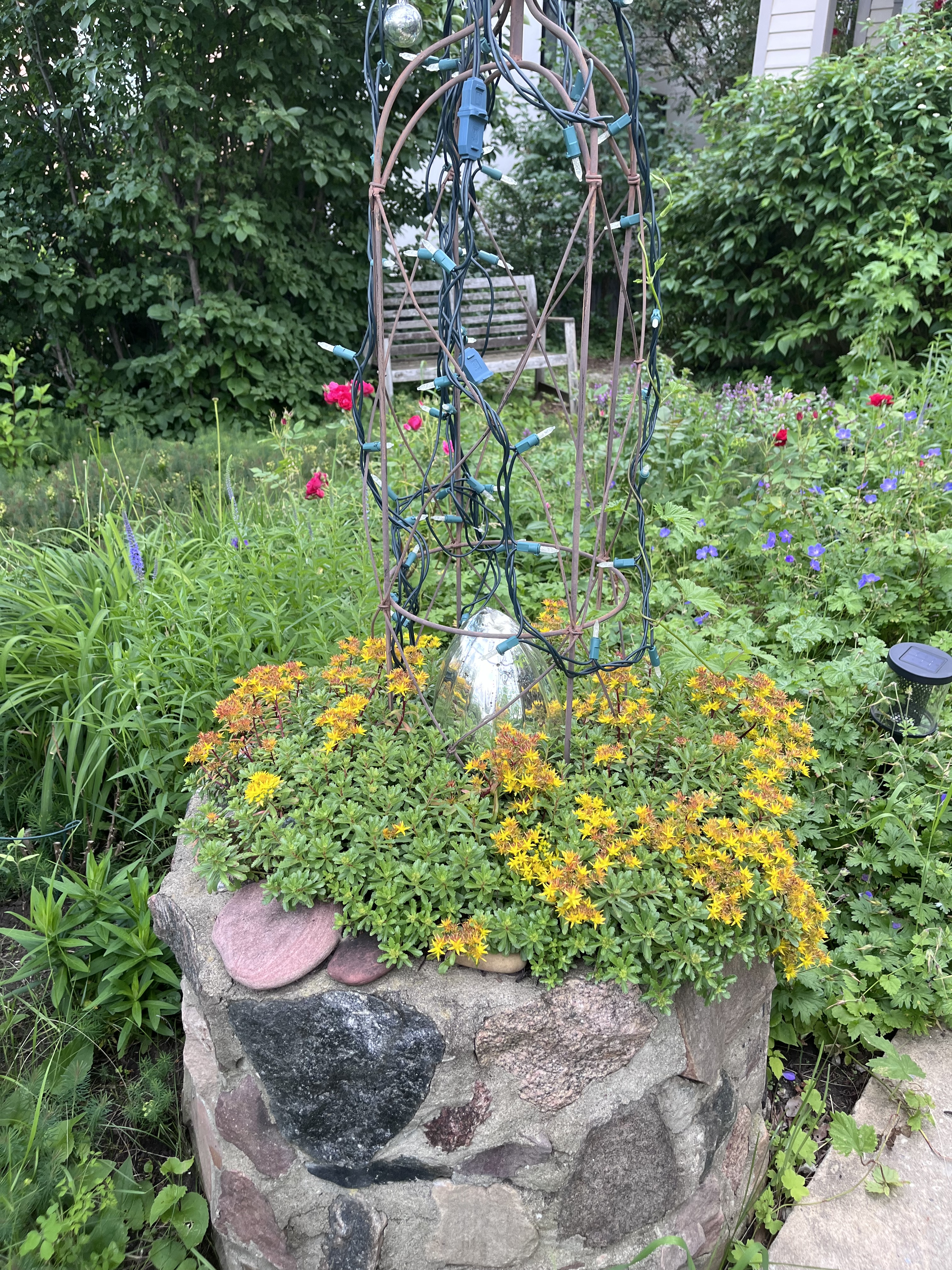
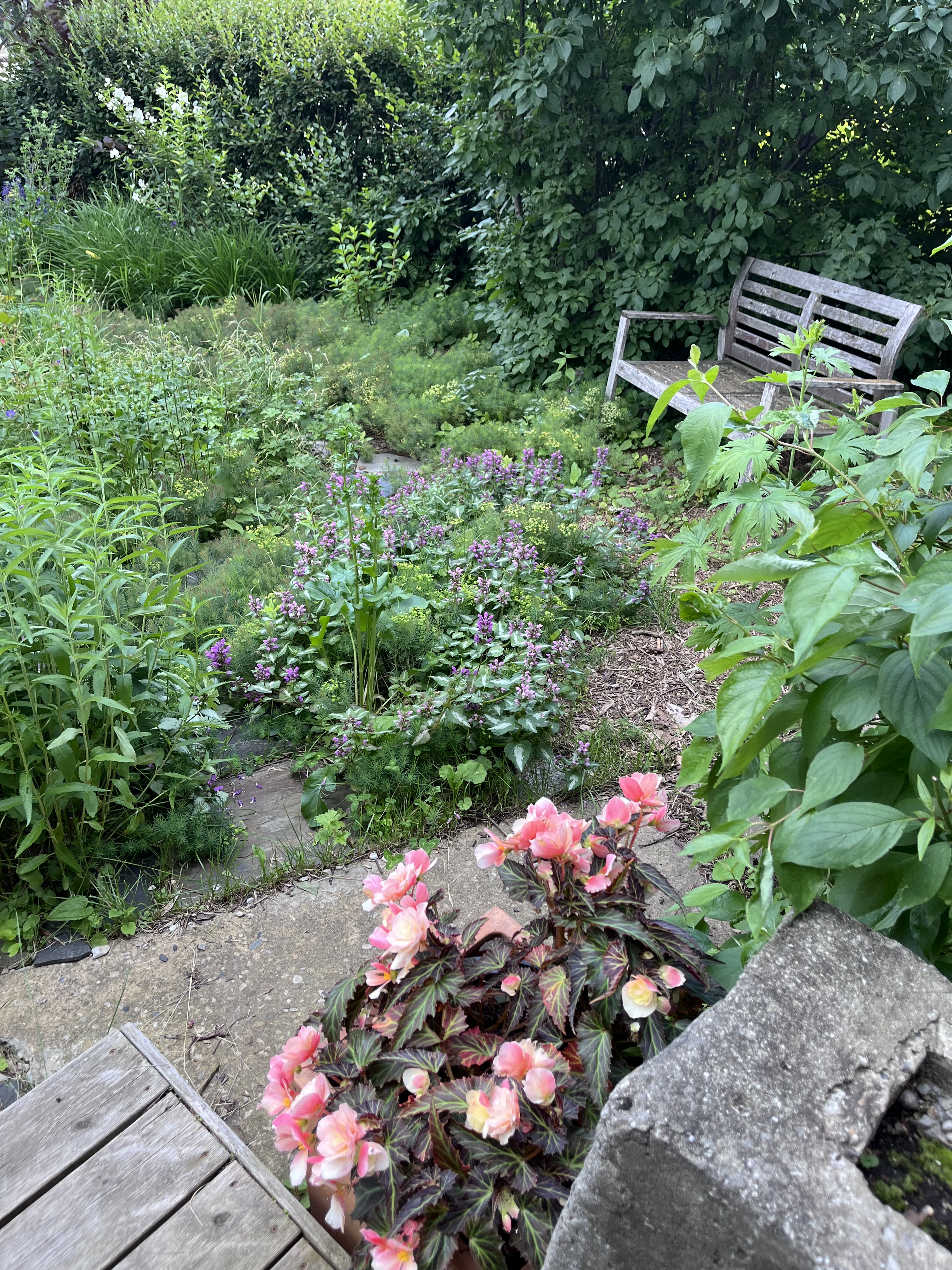
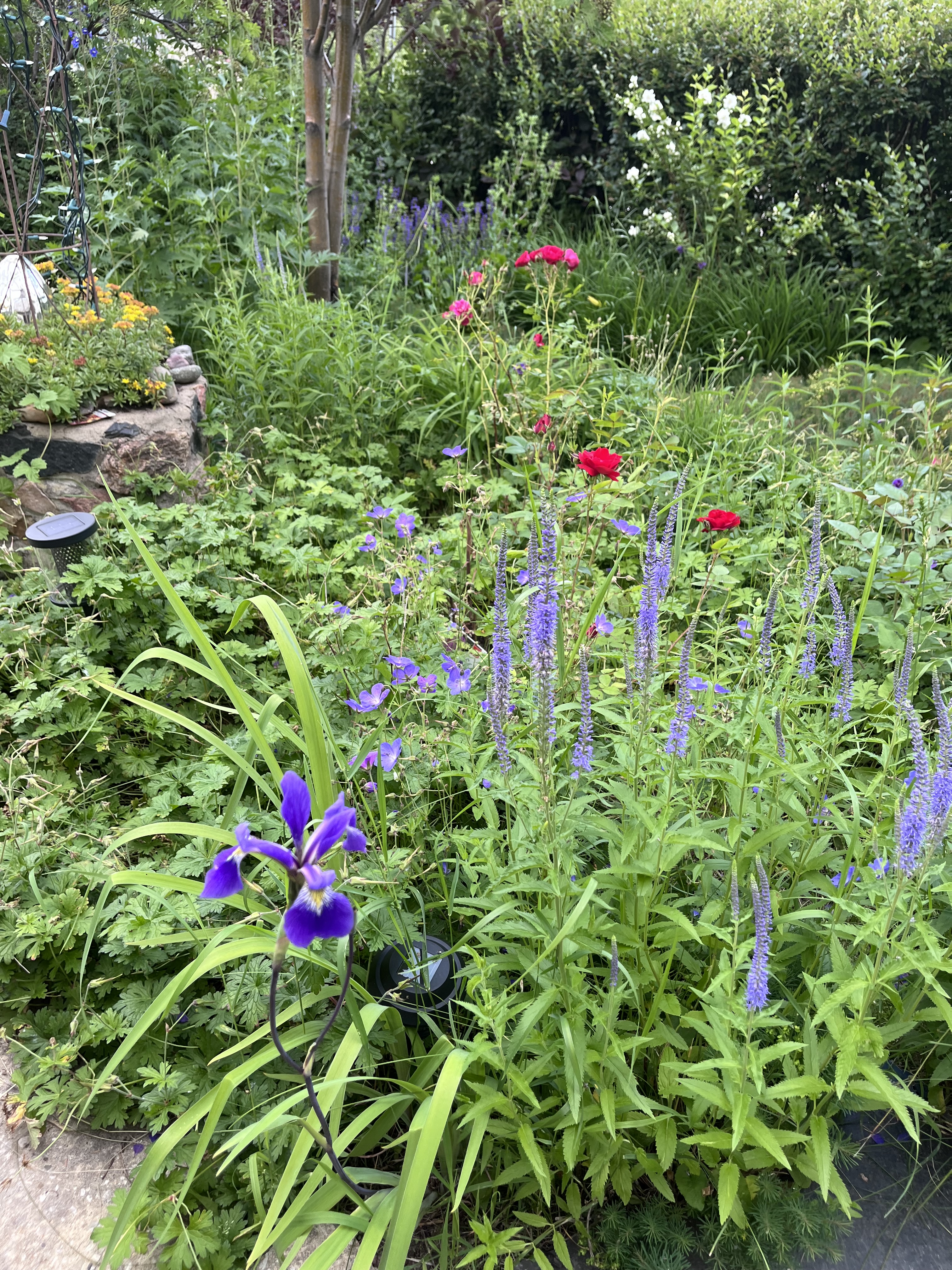
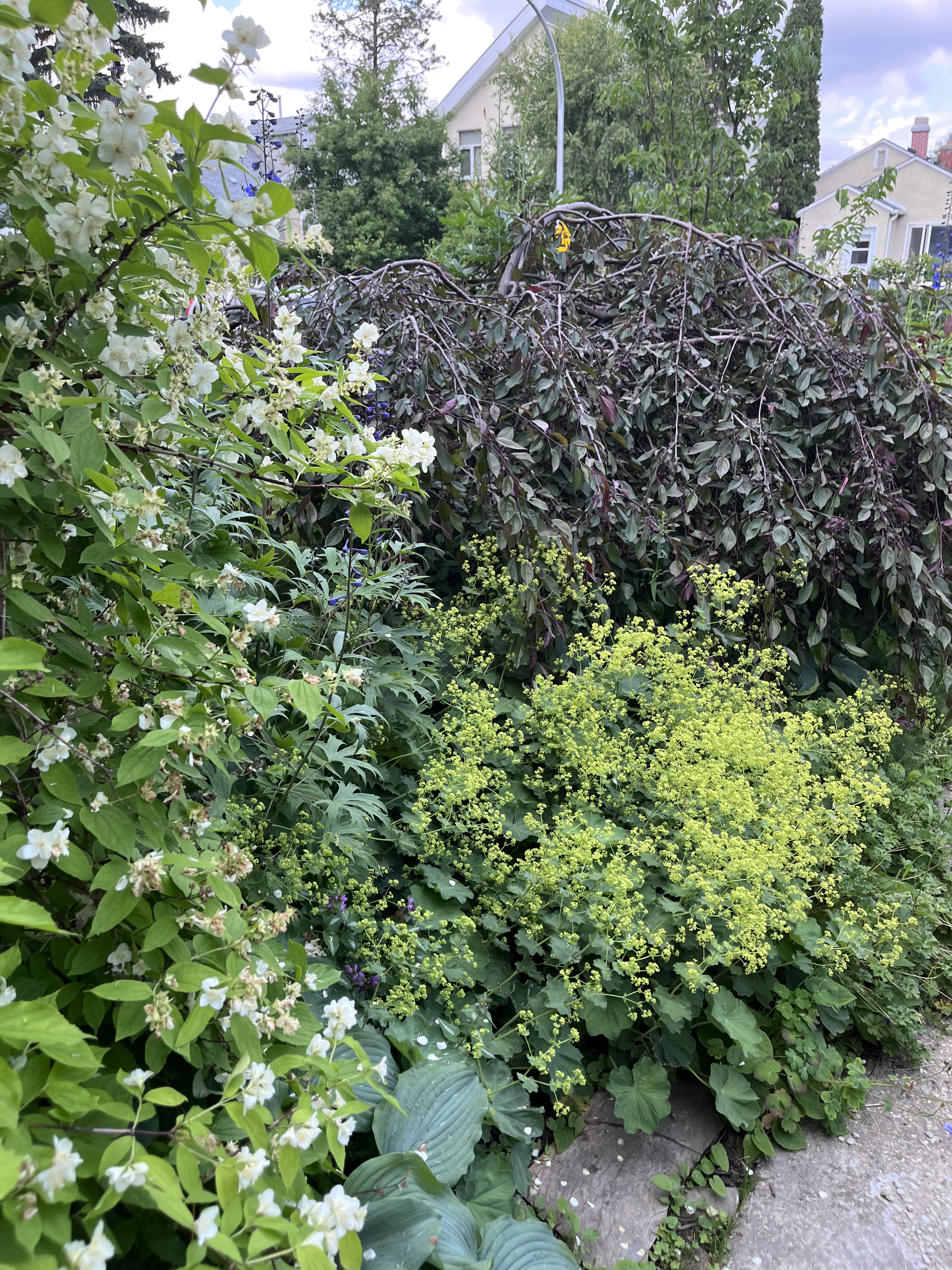
A stone well filled with golden Aizoon stonecrop spill over the edge. A frenzy of Johnson’s Blue Geraniums drift towards the house. Emily Carr red roses poke above this fray along with violet spires of Veronica otherwise known as Longleaf Speedwell. Pink peonies and a wildly proliferating racket of fragrant shrub roses surround a Japanese lilac tree. Lady’s Mantle and variegated Hostas grow under the arch of a purple Weeping Crabapple that is flanked by renegade delphiniums and irises. A carpet of lime-green euphorbia drift through the garden. Fragrant Mock Orange sidle up to the wooden stairway. Potted plants, a pastel begonia, unlikely poinsetta, and ferns add colour to the steps.
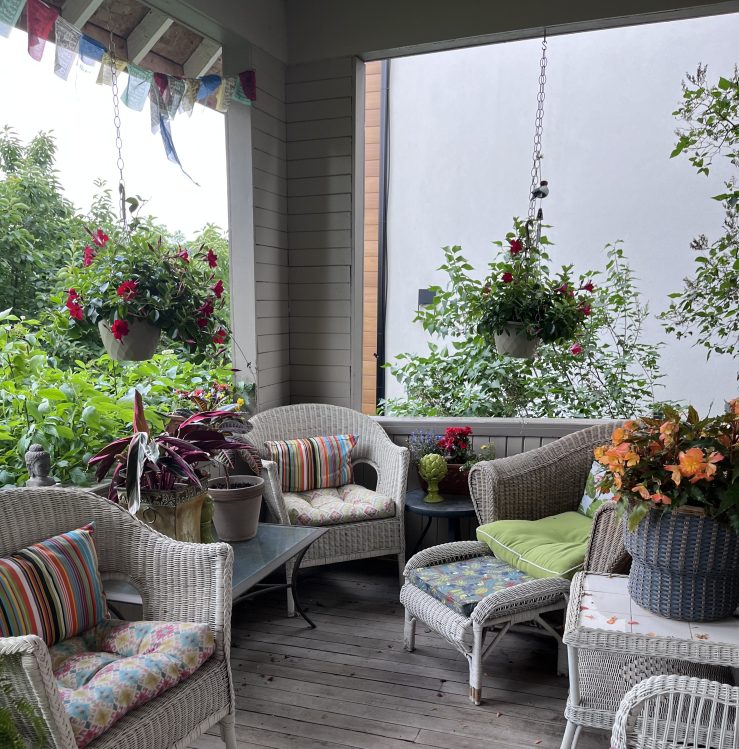
Potted plants, a pastel begonia, unlikely poinsetta, and ferns add colour to the steps. On the porch hanging pots of trailing red Brazilian jasmin or Mandevilla sway in the breeze.
The History of Mill Creek, a community defined by a tributary
Mill Creek is known for its community and for its often quirky beauty. Over decades it has resisted the destructive push for a freeway down the middle of the ravine and other anti-nature development thrusts.
My neighbour, the anthropologist Jan Olson wrote a wonderful book Scona Lives: A history of Riverlots 13, 15, and 17 that charts the history and lives of Mill Creek from its habitation by “Paleo-Indigenous peoples, Cree, Blackfoot, [and] Papaschase.”
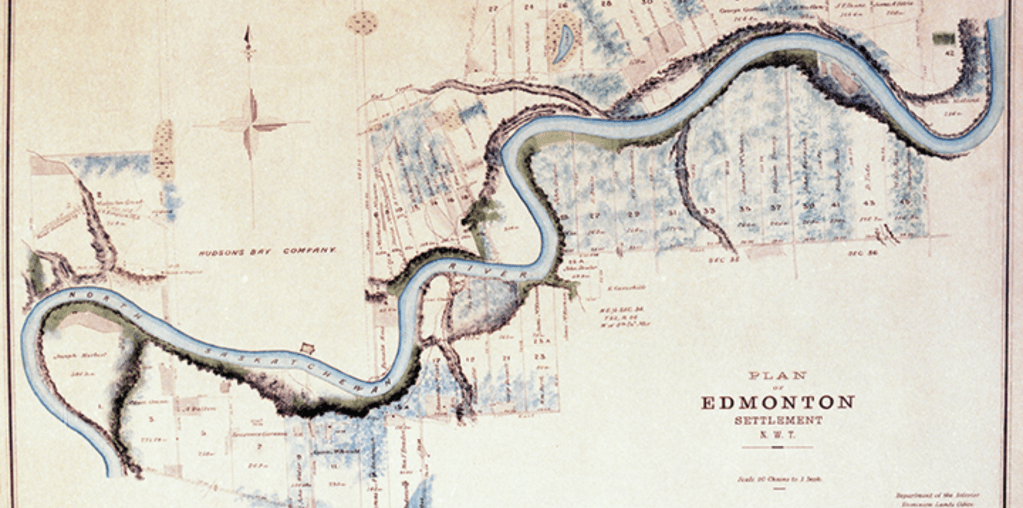
The Cree named this tributary of the North Saskatchewan “Stony Creek.” Settlers renamed it Mill Creek later after the temporary flourishing of an 1870s flour mill.
Trestle bridges in the ravine chart the travels of an historical railway system, “the Yukon and Pacific Railway line, which was the first rail connection between the towns of Strathcona and Edmonton. Completed in 1902, the railway followed the Mill Creek Ravine alignment and crossed the North Saskatchewan River over the Low Level Bridge, providing reliable, convenient passenger and freight transportation services between the two towns as an alternative to John Walter’s ferry further west. Passenger service was provided until 1928, but the railway continued to provide a vital link until the 1950’s between the river valley industries and Edmonton’s south side commercial centre, which offered rail connections to the remainder of the province” (HistoricPlaces.ca).
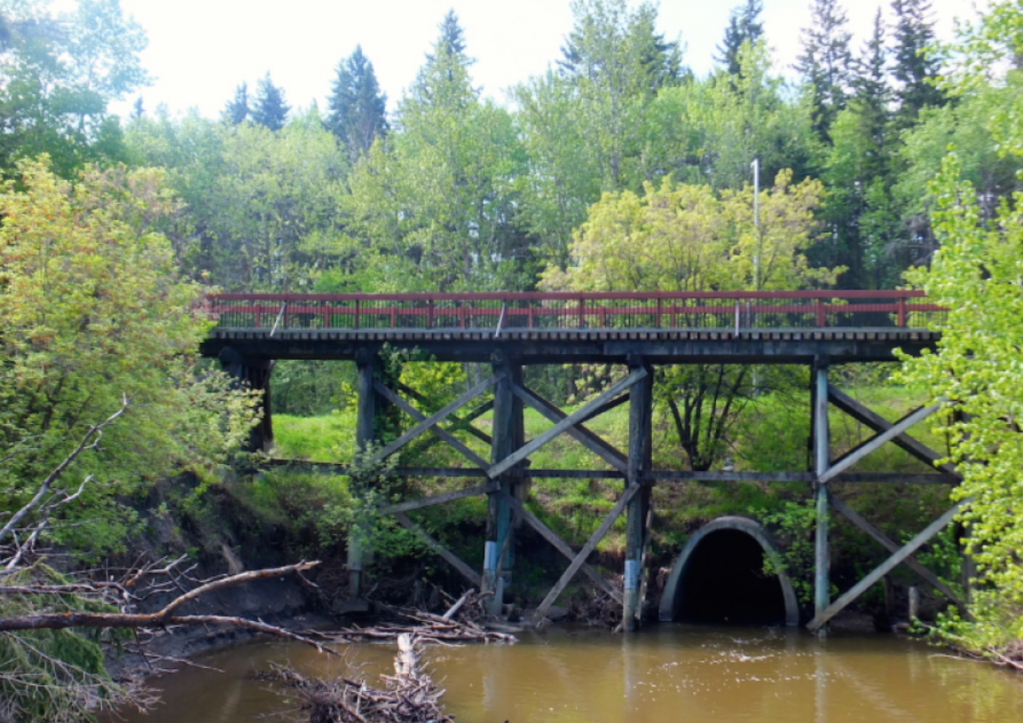
Later a short spur-line rail system provided transportation for the Gainer’s meat-packing plant, the site of an important 1986 workers’ strike in Alberta’s history. The bruising six and a half month strike was sparked by Peter Pocklington’s wage cuts and decision to eliminate workers’ pensions.
In the life of Mill Creek, a scandal plagued its banks when, in the 1960s, the city decided to run a freeway through the natural ravine. A very effective activist group of neighbours and allies fought off this initiative. Pearlann Reichwein and Jan Olson describe the successful resistance to this development in their essay “The Mill Creek Park Movement and Citizen Activism in Edmonton, 1964–75“:
Neighbours and a grassroots coalition of interests and creative thinkers turned the tide of freeway development and public park making. They dared to take on city hall, and they won. This action was a philosophical expression of environmental values and faith in democratic civic process, contemporaneous with influences that were both local and transnational. The spirit and strategies of grassroots urbanists were much in evidence, as neighbours became activists together in efforts to save their homes and the local woods. A closer look at the Mill Creek Park movement sheds light on Edmonton’s culture of civic activism in the 1970s and the people who helped to shape it.
In recent years, hard-fought Mature Neighbourhood Overlays to protect the older parts of Edmonton have been ditched in order to push for infill development lauded by all of us who argue for densification and fewer suburban commutes. Many share an interest in increasing housing opportunities in Edmonton.
However, the new urban development refused to take up the offer of Edmonton city planners, paid for by our taxes. Woe to anyone with inspired ideas about how to develop infill in a sustainable and respectful way. With no design oversight, some developers are running as fast as they can to build poorly constructed eyesores. Some are white elephants like a beut a few streets away, a rabbit warren of small rooms that has been up for sale for a year with no takers.
Meanwhile dismayed neighbours tussle verbally with advocates who tolerate ill-designed megabuildings that include flophouses with rooms rented by the hour. (In their wisdom, Edmonton City Council considered extending this rental period to twelve hours. A family friendly revision. Not!
History will tell the story of resistance and capitulation to poor urban design at this moment in time.

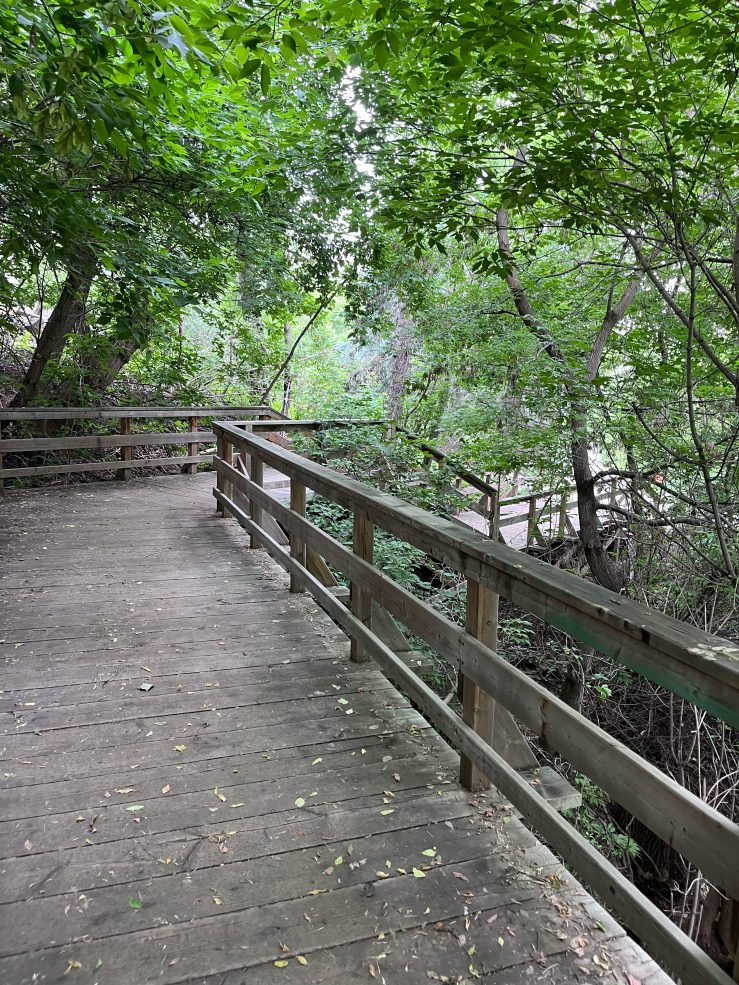
This year the chaotic weather of climate change has brought monsoon-like rains in spring, and overwhelming snowfalls in winter. However in a gulley across 98 Street near 92 Avenue, a frog pond is dried up and silent, dessicated from years of drought.
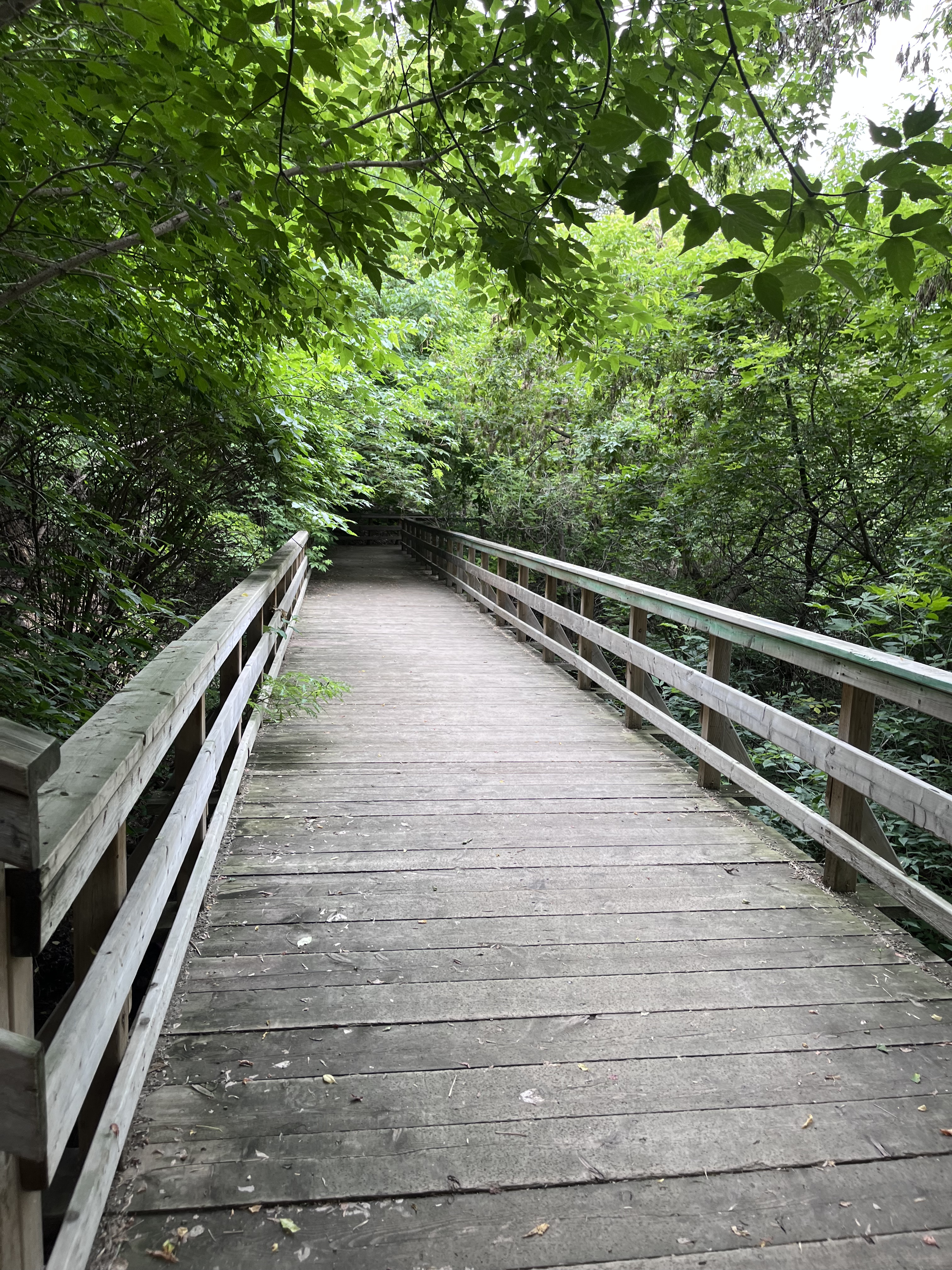
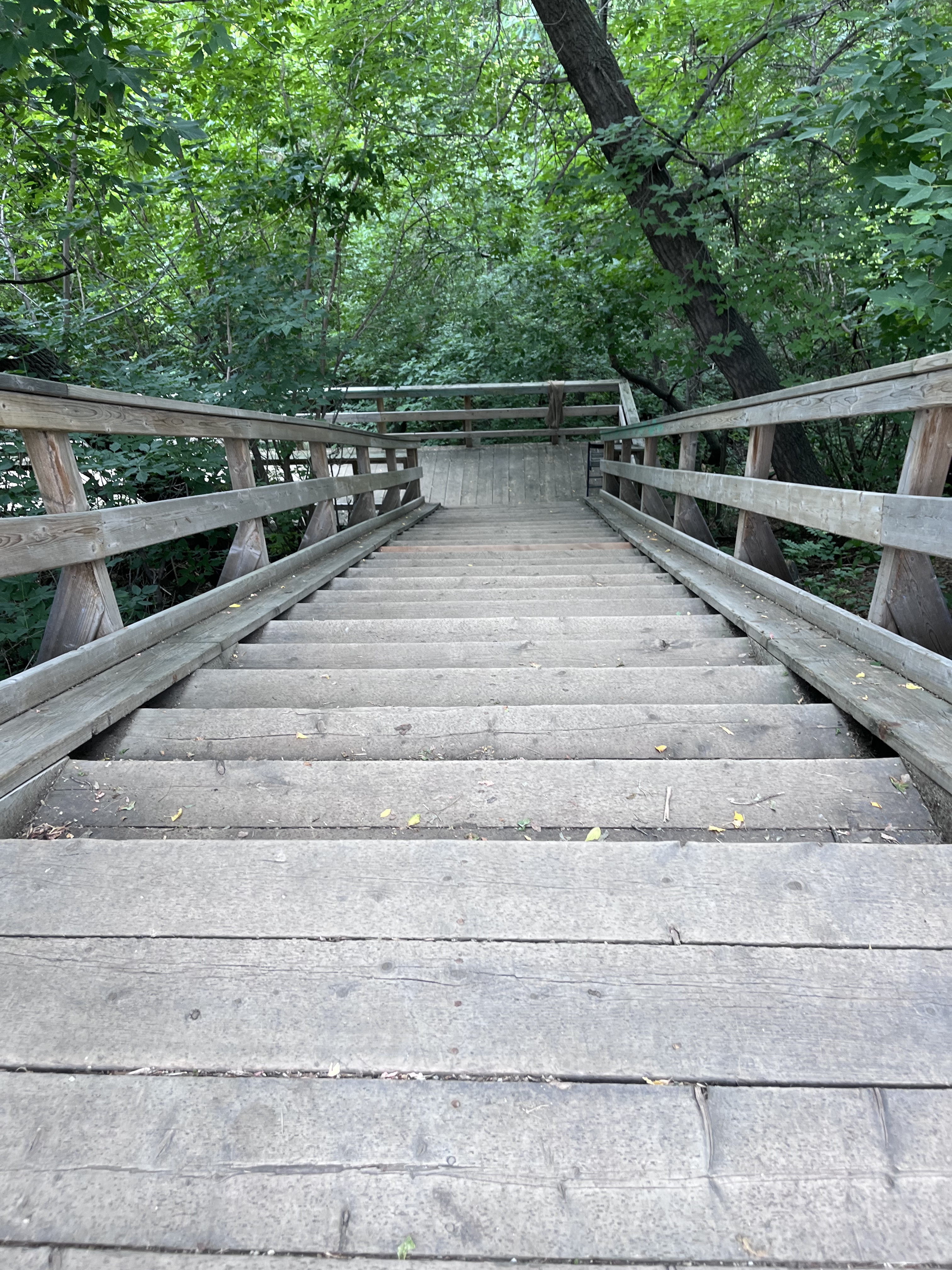
This is the scene where two summers ago on the other side of the path to the meadow, an unhoused man, “a drug dealer” they say, died of an overdose in his orange tent in the woods. Safe injection sites have been banned by our inhuman provincial government. This young man’s abandoned body was found days later by a spaniel and his human out walking. The dog’s shocked owner called the police.
The following day, two Indigenous women arrived at the foot of these stairs settling into the steps late one morning to conduct a traditional Cree ceremony. Smoke rose slowly through the trees as they smudged sage or sweet grass in his honour.
This story of loss, death, transition, and remembering remains part of this wooden structure we walk across each day.


Beautiful!! Your blog this time is a horticultural paradise. Food for the soul. 🌹🌻🌷🥀
LikeLiked by 1 person
Thank you Florence … I need gardens and music and friendship and yoga and art and meditation and mothering and activism and Ruby Coyote and love to keep myself out of despair at this moment in time with the bad guys banging at the door here there and everywhere. So glad you are in my life, dear friend.
LikeLike
What a delightful blog. The pictures were great – and your comments were wonderfully detailed.
I also enjoyed your concise critique of this time in ourcity, province and the world. Bravissima, Janice!
LikeLike
Thank you, Caterina. It was fun to write. Summer in our city has compensations for the nasty political developments.
LikeLike